
An illustrated history of Interactive books Part 2: From serious science to playful trick, by The Booknook Librarian
From serious science to playful trick (early transformation books)
By the 18th century, book printers realized that moving paper parts could also be theatrical.
Harlequinades and “metamorphosis” books offered a kind of sliding or folding stage show on paper.
Mechanically, these are early transformation books: no rising sculpture, but cleverly cut panels that reveal alternate scenes when folded or flipped.
A typical Harlequinade looked like an ordinary sheet until the reader folded the page up or down along horizontal cuts: suddenly a grieving widow became a delighted bride, or a city street turned into a burning battlefield. In the modern example below, the empty Great Hall of Hogwarts changes into a festive, Christmas decorated hall where tables set and the hall is suddenly crowded with students.
EXAMPLE from:
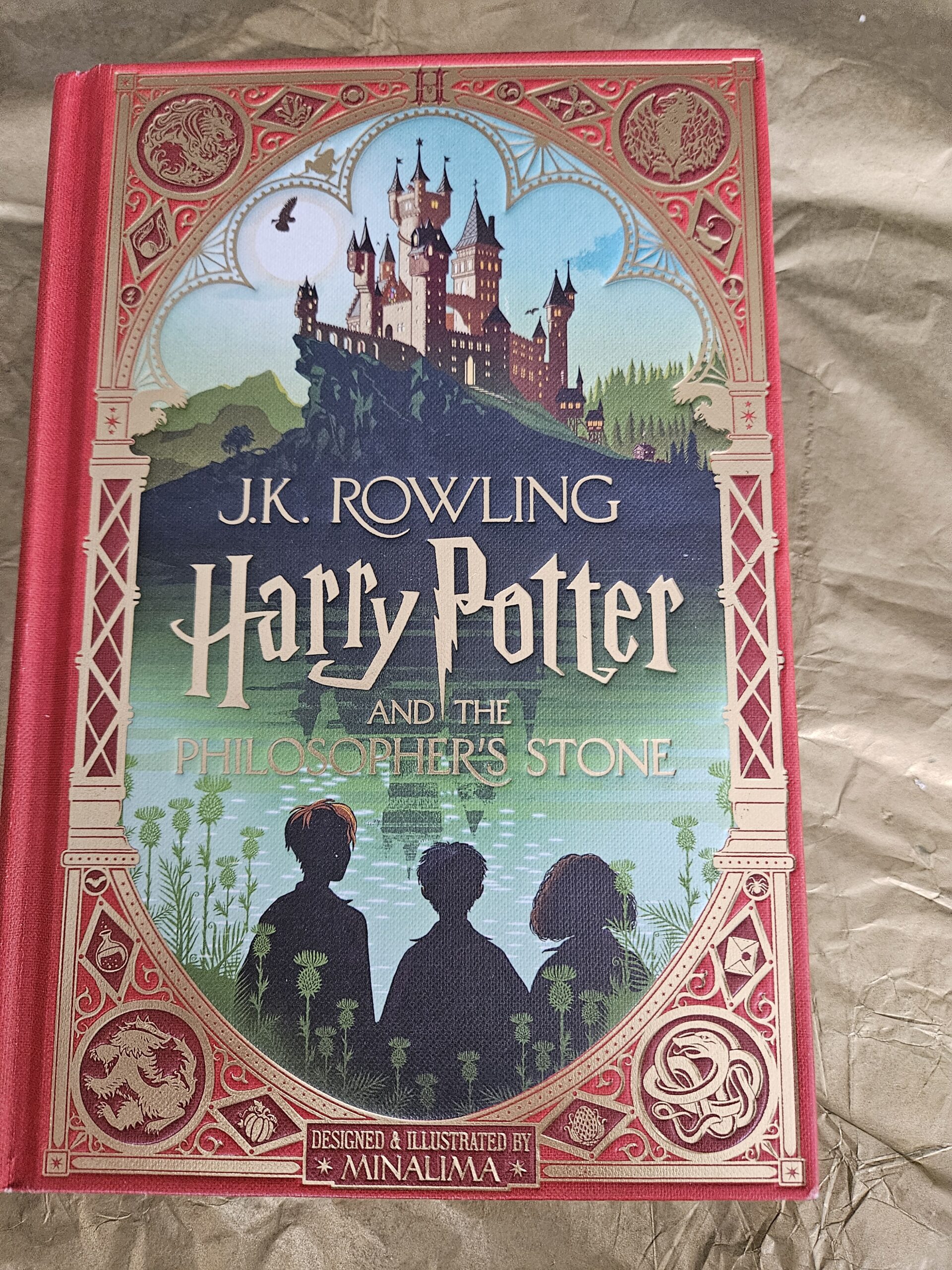
Children and adults alike enjoyed these rapid transformations, and printers enjoyed selling the same sheet as “four pictures”.
Transformational books using pull tabs
Another genre of books was transformational in yet another manner. These books were using a new technique called the pull tab to achieve movement or change.
Beneath are some examples of pull tabs and how they work:
How do pull tabs work?
Pull tabs in interactive books are sliding mechanisms that let readers move parts of the illustrations by pulling a tab, revealing hidden images, animating characters, or changing scenes.
Basic Mechanism
A pull tab typically consists of a layered paper strip glued to a moving image or element. When you pull the exposed tab (often at the page edge), the strip slides through slots cut in the page, dragging the attached artwork horizontally, vertically, or in arches. This uses simple paper engineering like V-folds or hubs to guide smooth motion and keep pieces upright.
EXAMPLES from:
 AND
AND
AND
Horizontally
Vertically
Arches (not all pulltabs or in this case a pull strap/pull strip, are pulled by hand. In this case the hand opens a page and a pull strap is attached to this page, it pulls a piece of paper into an arch)
Common Setup
- Base layer: Fixed background artwork with precise slots for the strip.
- Pull strip: Double-thick cardstock (scored for strength) that threads under/through the page.
- Moving piece: Glued to the strip’s top; often braced front and back to stand vertically.
- Guides: Tabs or folds prevent buckling and ensure alignment when the book closes.
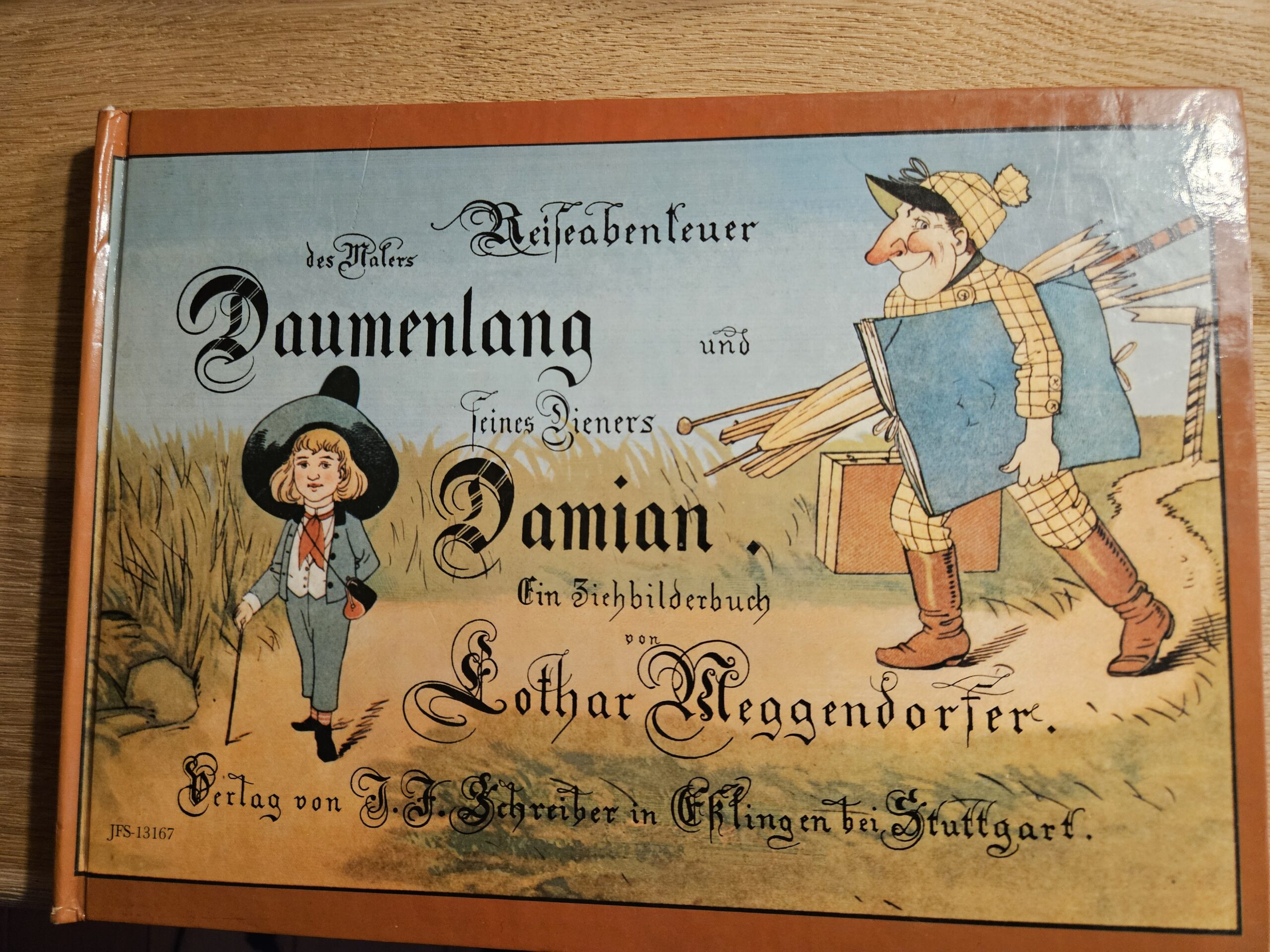
For example, pulling a tab might slide a ship across an ocean or make an animal’s mouth open, like e.g. in older interactive (not pop ups yet) examples by Meggendorfer, training hand-eye coordination in kids’ books. Remember both names, because Meggendorfer (6 November 1847 in Munich – 7 July 1925 in Munich) as well as Kubasta (1914, in Vienna – 1992) were instrumental to making pop ups popular.
EXAMPLES by Lothar Meggendorfer from:

In older pop-ups like those by Kubasta, they’re paired with wheels or lifts for compound effects.
EXAMPLE by Vojtěch Kubašta from:
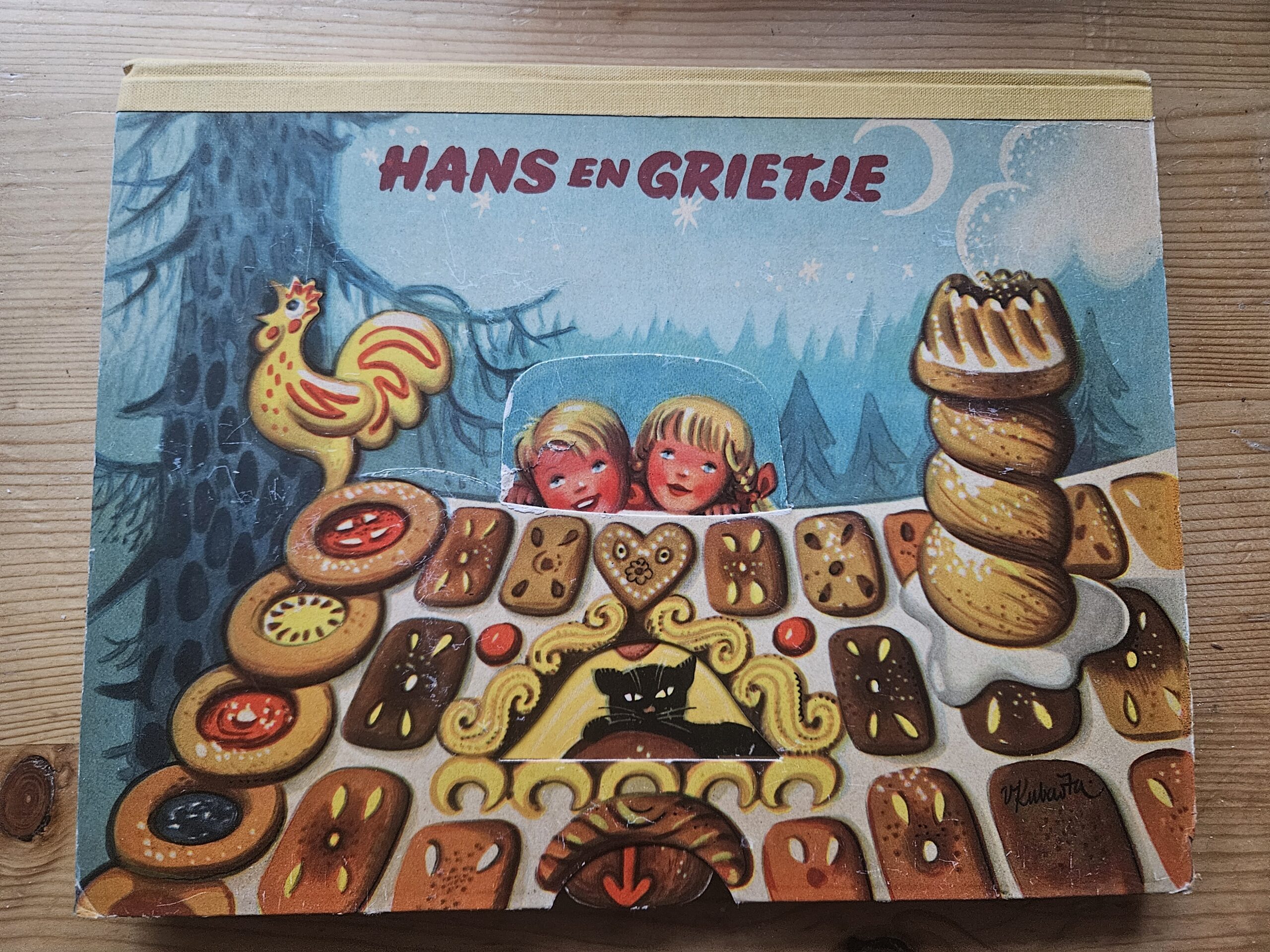
Beneath is an example of a simple pull tab mechanism by Kubasta.
These trick images marked a shift from intellectual instruments to visual entertainment.
They were still not fully three‑dimensional (the examples of pop ups by Kubasta shown here are of a later age then the flat ones by Meggendorfer), but the book was now clearly a performer, not just a lecturer.
My next blogpost will show the development from interactive books to real pop up books.