
35. China/Guangxi: Walk and visit to the Longji Village
After a not so early rise and a shower, The Wandelgek went to the restaurant area and because the day started a lot more sunnier than yesterday, he sat down on the outside balcony to have breakfast…


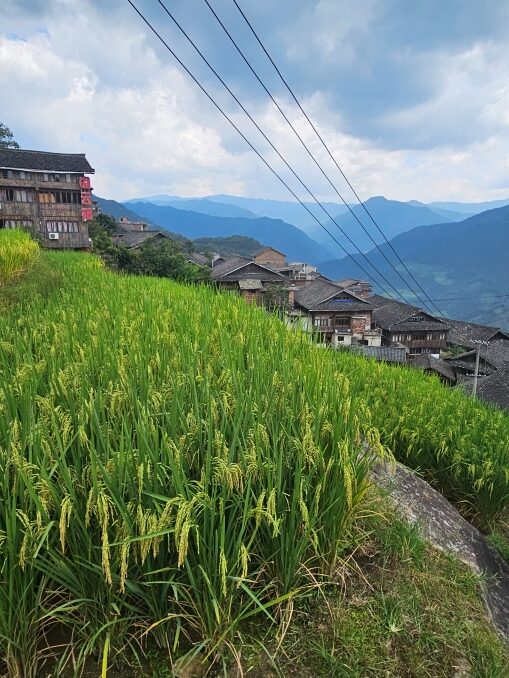
… and to enjoy the views over the surrounding hills, covered in rice fields …


Simply awesome …

He had agreed with Tao to leave for the walk at 10 AM…
The morning began in Ping’An, where The Wandelgek set out along the terraced slopes that shimmered in hues of gold and green under the rising sun. The village still stirred itself awake — roosters crowing, smoke drifting lazily from kitchens, the roofs of timber houses glistening with dew…

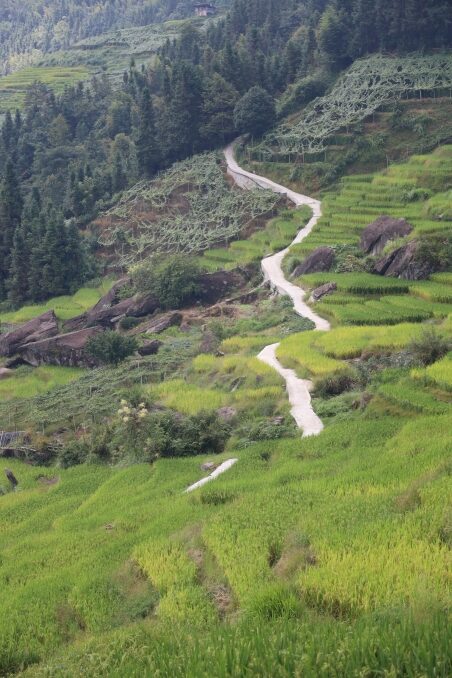
… From between these houses, a narrow path led him downward, first paved with cool grey stones, and stone steps then turning to earth as it wove through bamboo and the sculpted terraces. The air alive with drifting sounds — roosters calling, water trickling, voices carrying from the fields below.

Walking map
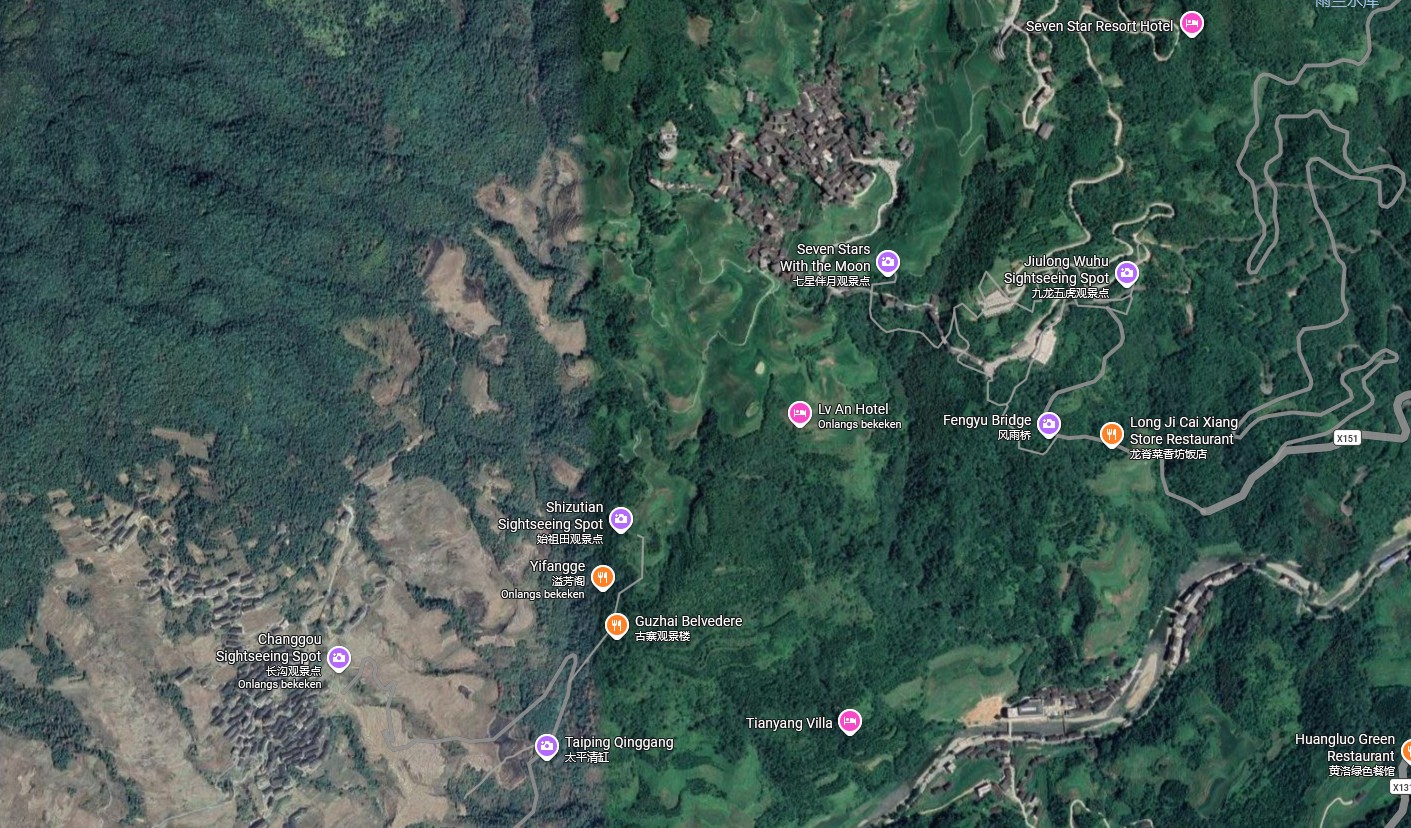
Top center is the Village of Ping’An and bottom left the Zhuang village of Longji …
As The Wandelgek descended, rounding a bend, he came upon a quiet slope dotted with moss‑soft hillside graves. Stone markers leaned slightly forward, each encircled by wild grass and spring flowers. Each small mound carried offerings of incense and flowers, reminders of how the Zhuang maintain connection between the living and their ancestors. The terraces themselves seemed a continuation of that dialogue — crops feeding people, people honoring those who came before. Smoke curled from smoldering incense, dissolving into the mountain wind as if carrying whispered words skyward.


… He paused for a moment, feeling the peaceful bond between the living and their ancestors, all nurtured by the same earth and water that shaped these terraces.
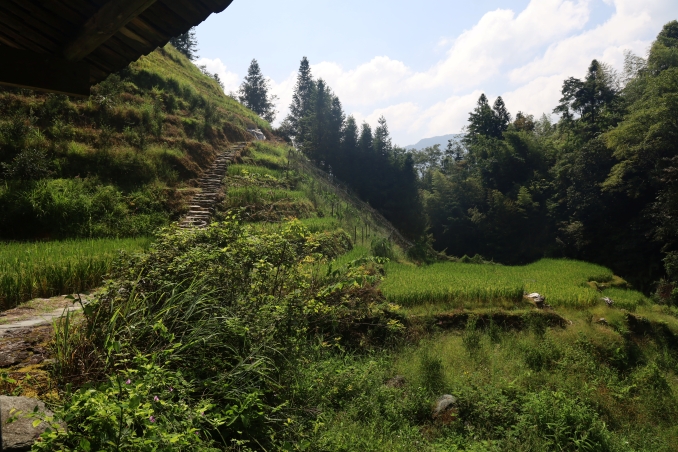
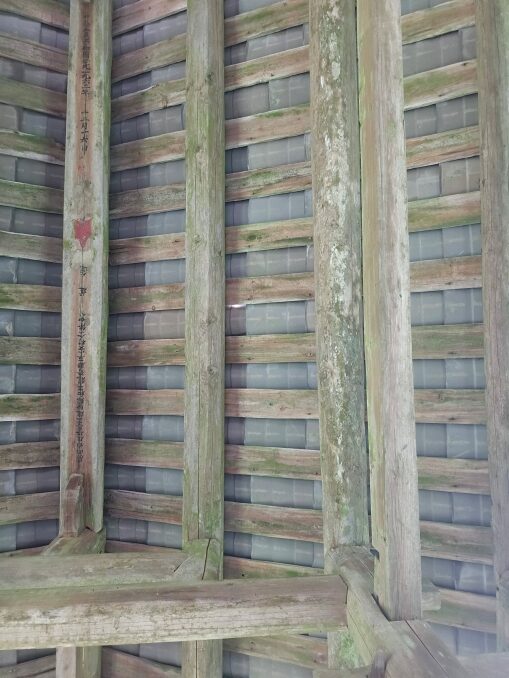
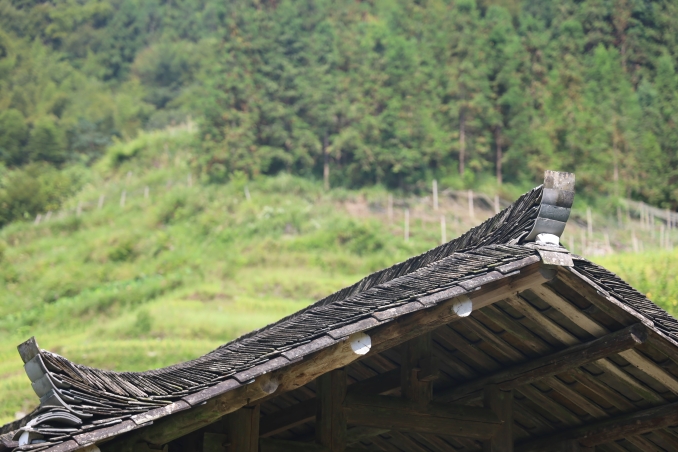
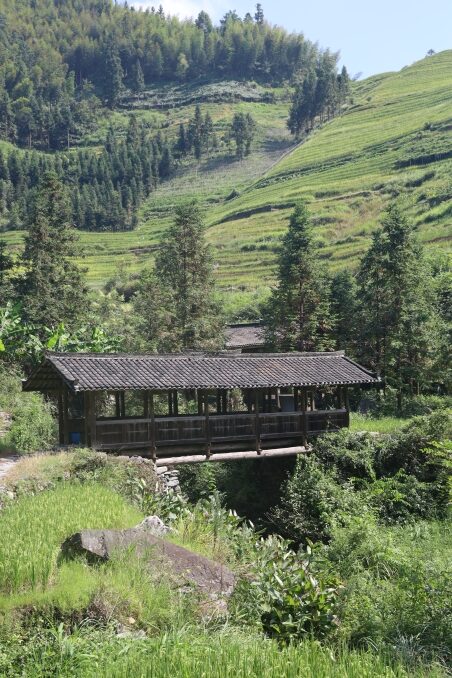
Soon the path reached a wooden wind-and-rain bridge stretched elegantly over a laughing stream. This wooden structure, built entirely without nails, had stood here for generations, both crossing and shelter — a masterpiece of local craftsmanship. Children played beneath it, their laughter echoing under the roof’s dark beams. The Wandelgek lingered, listening to water and wood converse in the rhythm of age.


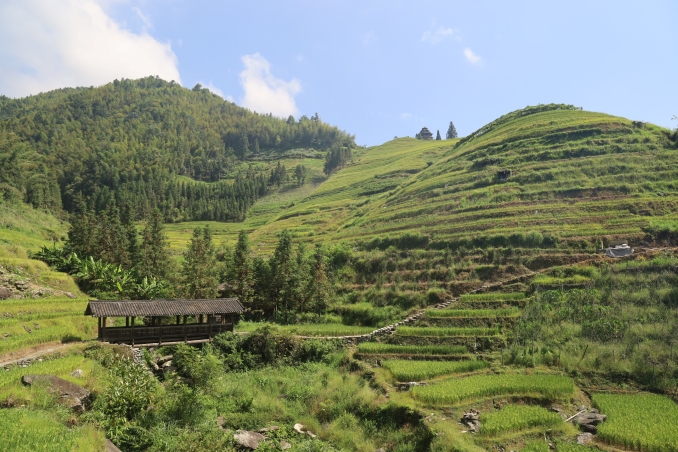
Its aged beams gleamed with the sheen of many seasons, and the tiled roof clicked softly each time a gust passed through. Beneath it, children were tossing pebbles into the water, their voices echoing beneath the vaulted timbers…
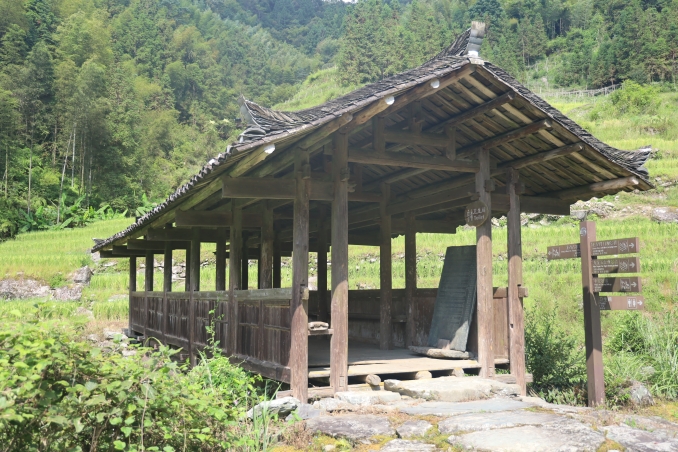

The Wandelgek lingered there a while, watching the water flow beneath the bridge’s worn planks — both a resting place for travelers and a living memory in wood and stone.
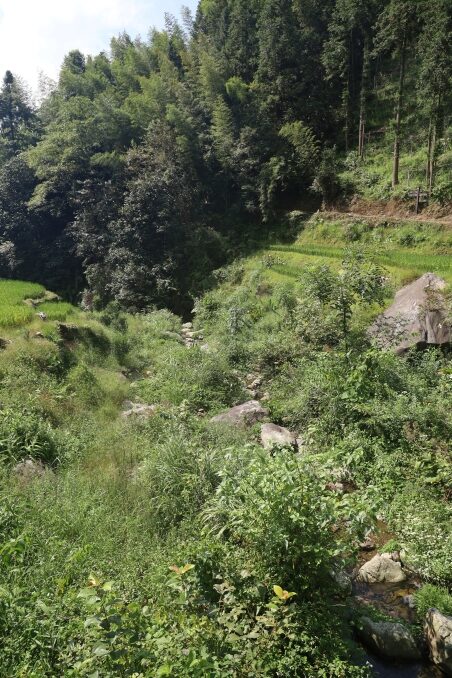 To be honest; this place felt a bit like The Shire at Hobbiton as envisioned by J.R.R. Tolkien in some of his watercolor drawings and by Peter Jackson in his movies The Fellowship of the Ring and A long expected Party.



The trail then climbed toward Longji, a Zhuang village nestled closely against the slopes.


The Zhuang people, who have inhabited these mountains for centuries, were already at work for hours. Women in embroidered jackets stood knee‑deep in paddies, guiding the young rice into rows with steady hands. Men tended the water channels carved so precisely that every terrace brimmed without overflowing. Their language — musical, tonal, textured — drifted through the valley, shaping the air like birdsong.


Beside the road was marooned guesthouse, a silent witness of the decline in tourism caused by the previous corona years…
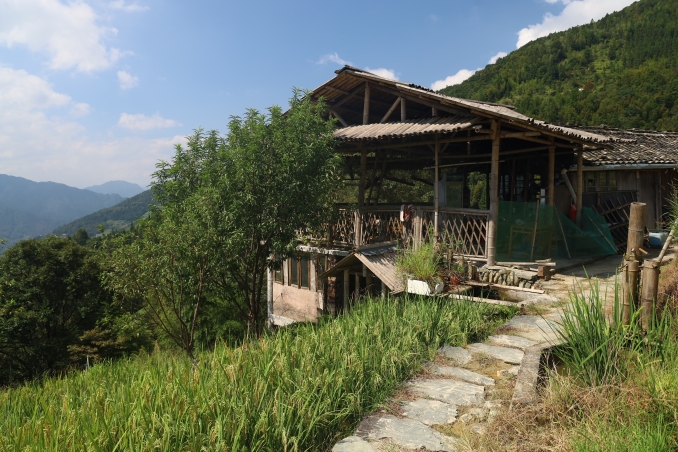
This had been a place to stay the night or just to have a drink …
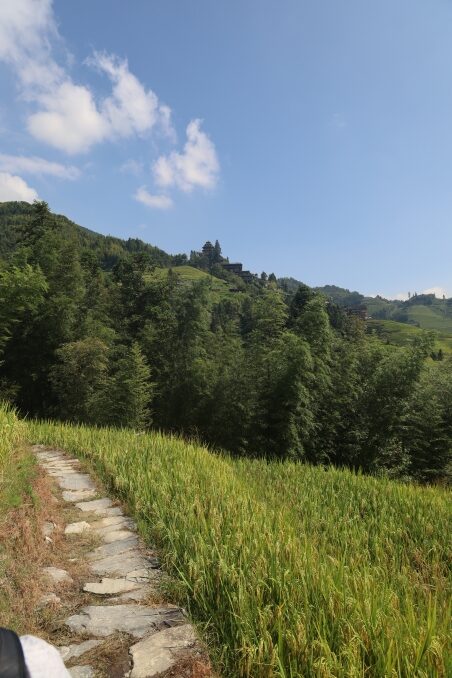
There were small wooden bridges for local farmers …
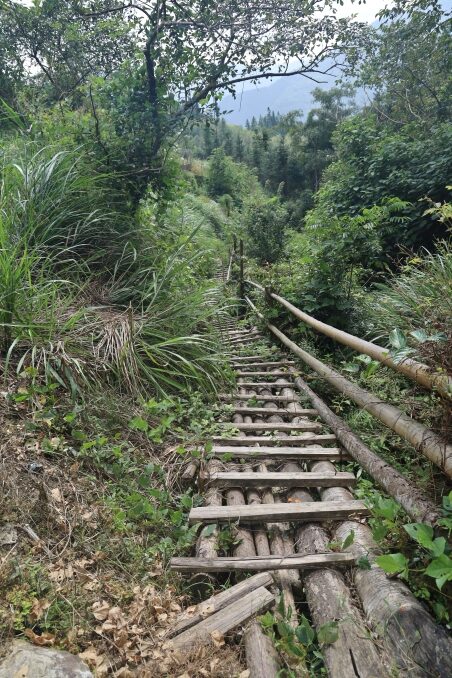
… hollow roads …
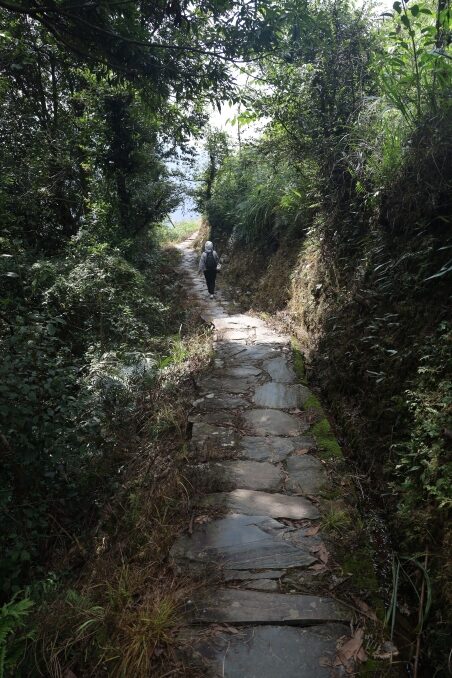
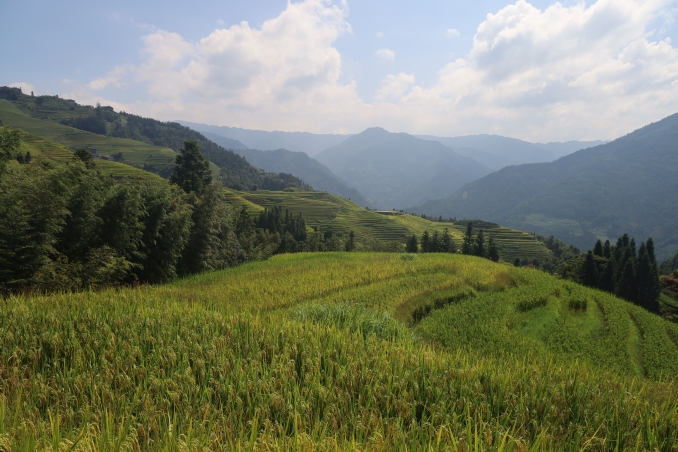
… and beautiful views …
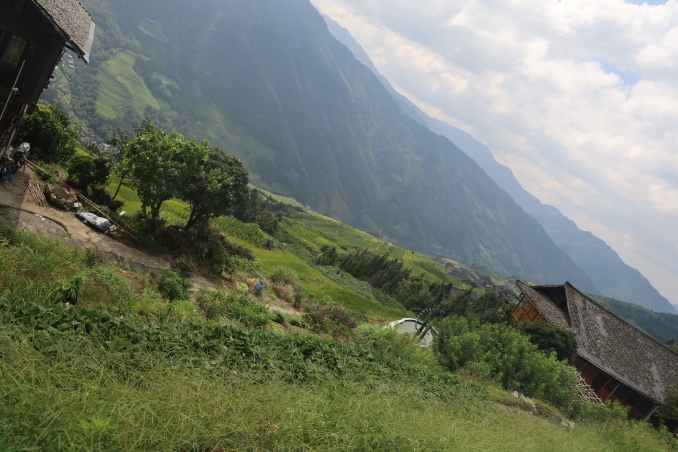
… before The Wandelgek reached the outskirts of Longji Village.
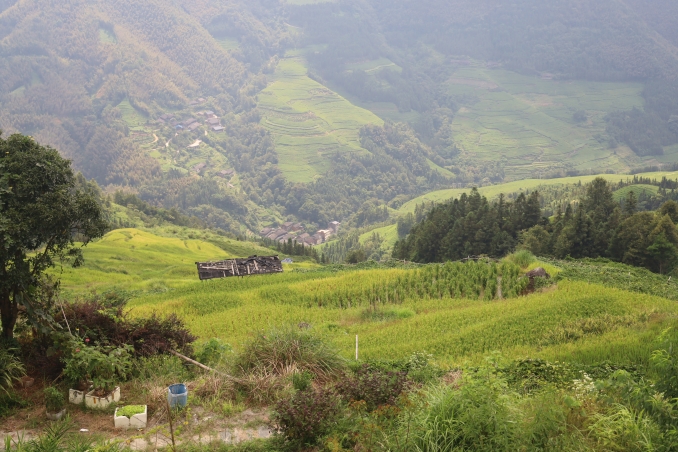
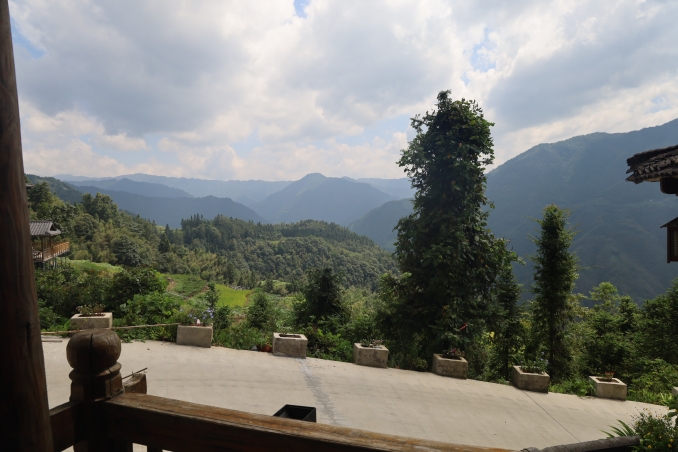
On a small terrace overlookingvthe surrounding hills, he and Tao stopped for a while to have some cold drinks and to replenish the water bottle supply …
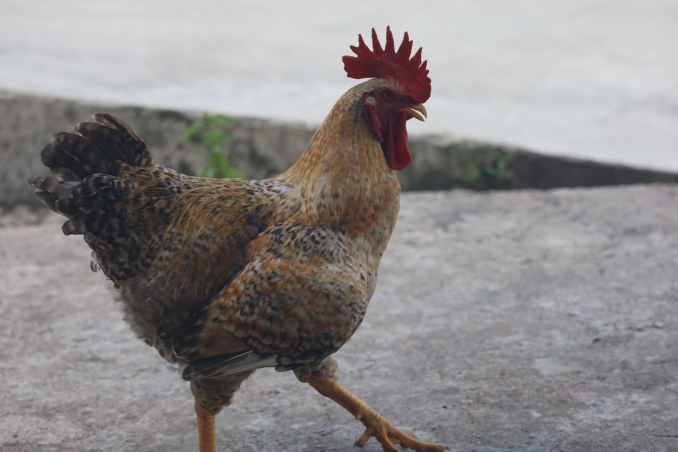
A rooster came by to say hello …
The Wandelgek noticed how the houses, all resting on tall stilts, seemed to anchor themselves into time. In one yard, women wove bamboo strips into baskets; in another, men repaired tools while chickens scurried among drying herbs. Life moved with a timeless rhythm.
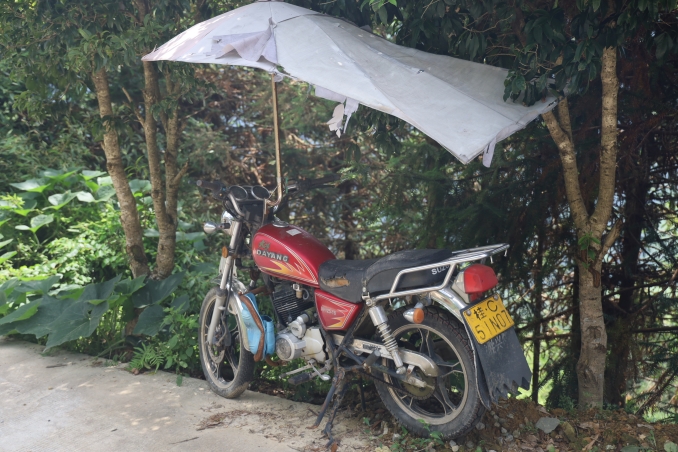
A motorbike had a tiny roof above it. A sign that the sun could be rather merciless overhere. It did not seem of much use against rain…
The houses here were older, set close together, their stilts dug deep into the mountainside. Beneath them lived pigs and chickens; above, verandas bloomed with hanging herbs and drying corn. A group of women wove narrow bamboo strips into baskets, their fingers moving with the patient grace of long practice.
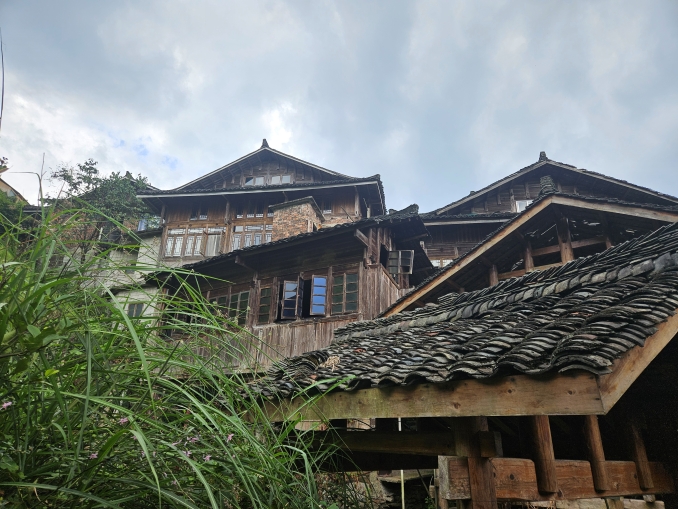
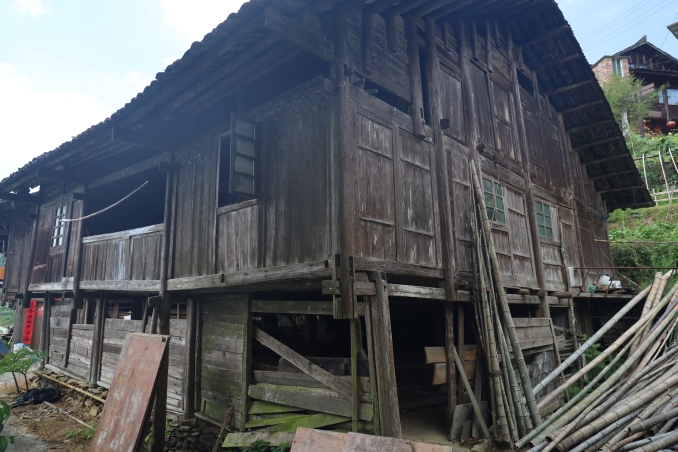 In houses like the one above, the living area is on the 1st and 2nd floor, while storage is on the groundfloor.


These villages, high up in the hills were only reachable via these walking paths. A motor or a bike could also drive there, but it is too narrow for cars. Cars were not allowed either.
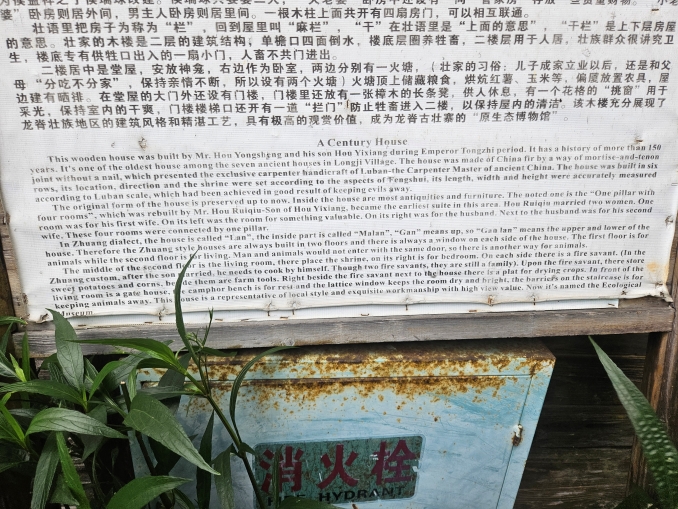
Beneath the eaves of an ancient house, said to be more than a century old, a group of elders sat together. The house’s carved lintels bore patterns of dragons and clouds, now softened by smoke and age. They greeted him with quiet smiles, as if they had seen countless travelers pass this way before…
In its shade sat a circle of elders, their faces mapped with years of sun and wind. They greeted the traveler with gentle curiosity, their dialect soft but melodic, their smiles carrying the calm assurance of a life still bound to mountain rhythms.
 This seasoned wooden dwelling, more than a hundred years old. Its pillars were carved with fading dragons and clouds, guardians of wood and spirit.
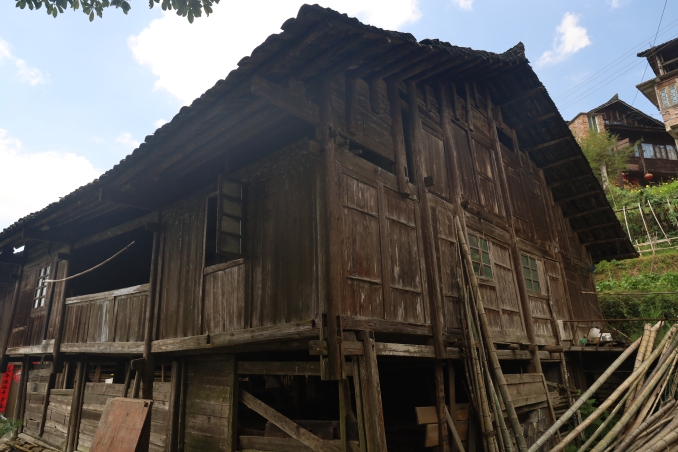
The “100-year house” in Longji Zhuang Village (likely referring to one of the over-century-old wooden stilt houses, or diaojiaolou, in Ping’an area) features a classic three-story layout adapted to the terraced hillside, built without nails for earthquake resistance.
The 100-year-old stilt house (diaojiaolou) in Longji Zhuang Village near Ping’an features a compact, three-story wooden interior divided vertically by function, connected by steep log ladders, with carved beams and bamboo partitions.
Ground Floor Room
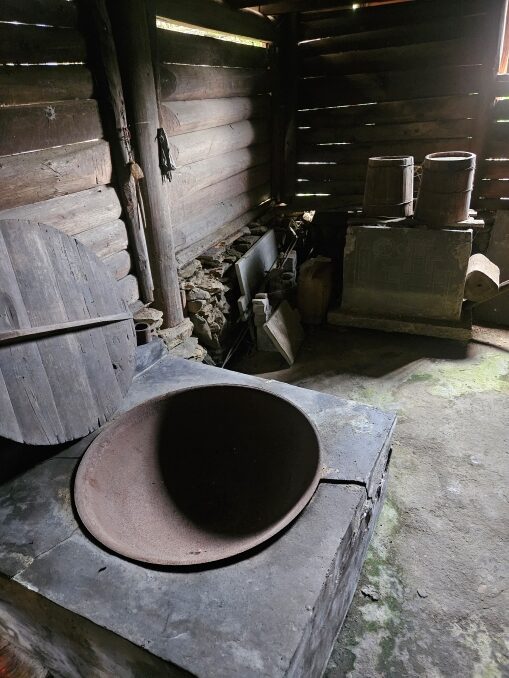
This spacious, open undercroft on tall stilts holds no walls, serving as a single multipurpose storage bay for rice sacks, farm implements, firewood, and livestock pens.
Cool and shaded, it shields against damp soil and wildlife.
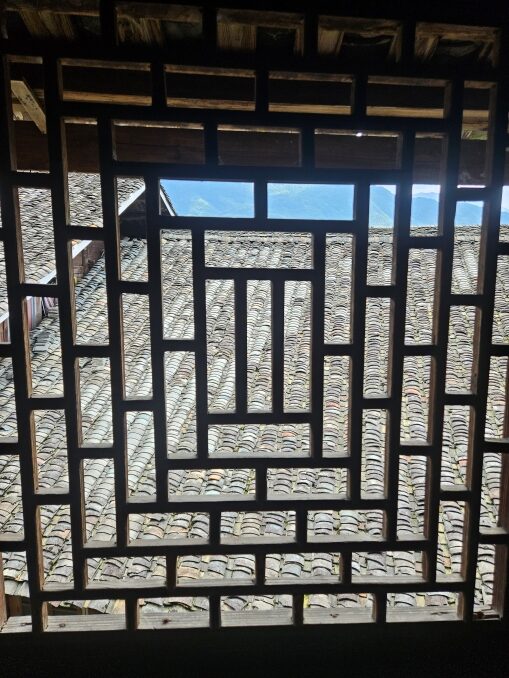
Middle Floor Rooms
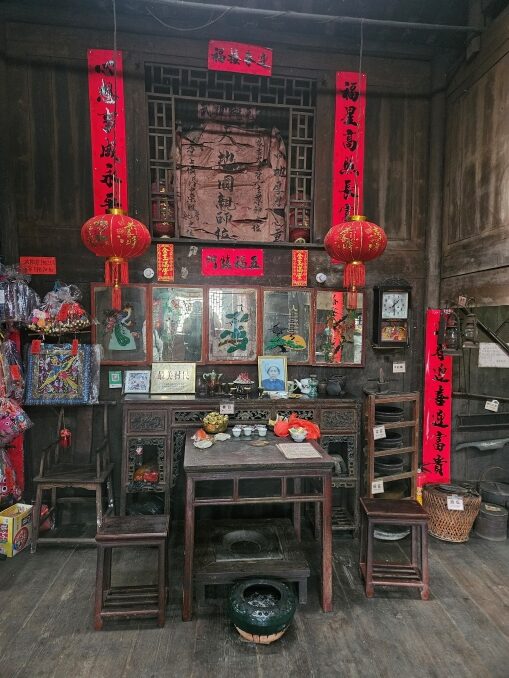
A central living room centers around a clay hearth for cooking rice and communal meals, flanked by two narrow sleeping chambers with raised wooden bunks covered in woven reed mats. Side verandas double as sitting areas with low stools and panoramic terrace views. Bamboo screens divide spaces flexibly for family privacy.
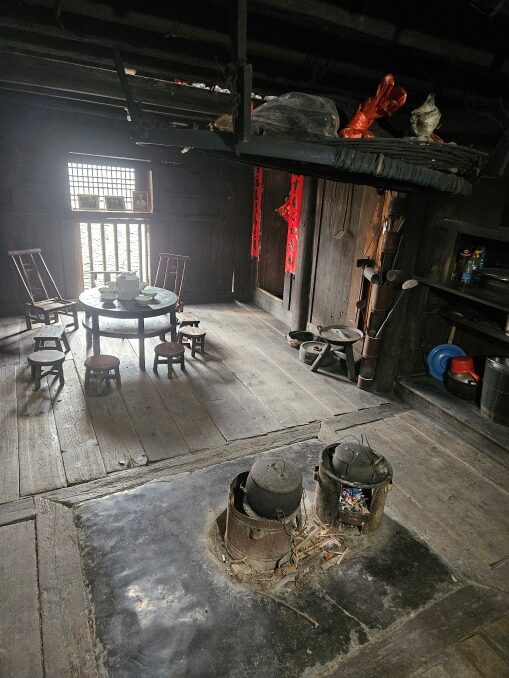
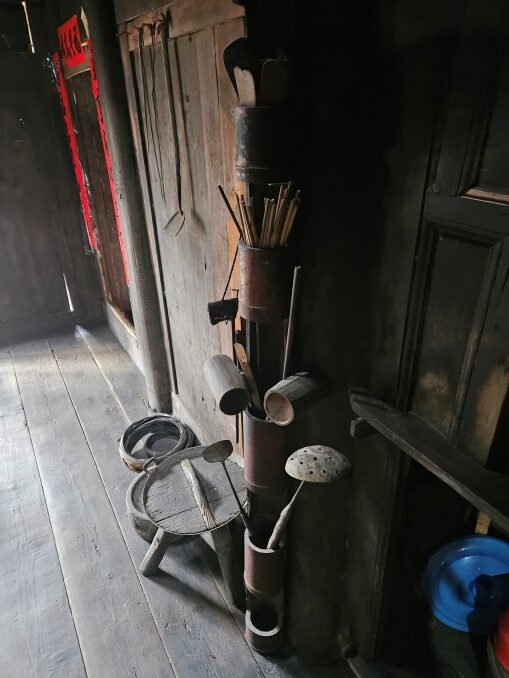
Above you’ll notice tiny seats around a small round tabke and a tea pot on top, near a large stone on top of which a fire place was created to heat the water and beneath some kitchen tools like spoons and mugs hanging from the wall or gathered in larger cannisters …
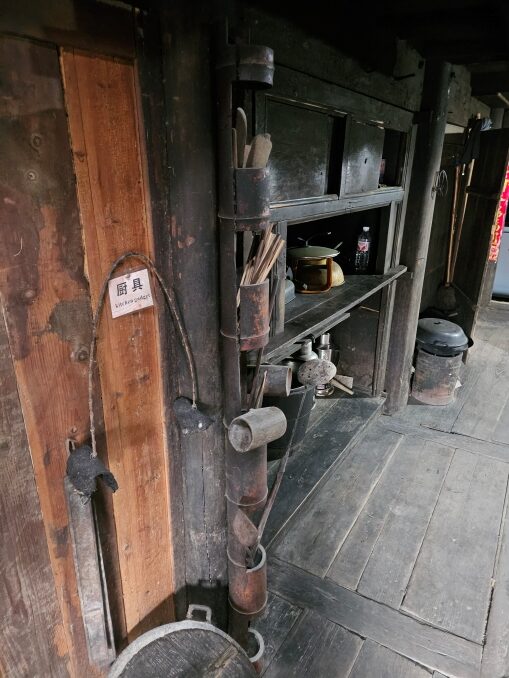
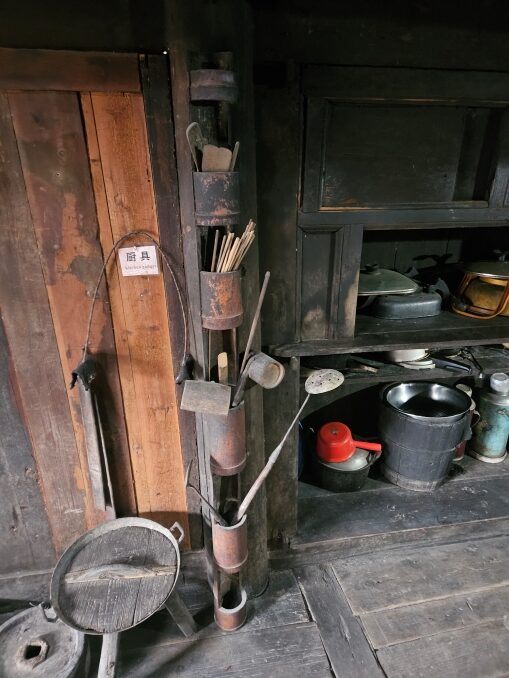
 Other kitchen neccesities like warming bottles and plates are conveniently stored on shelves …

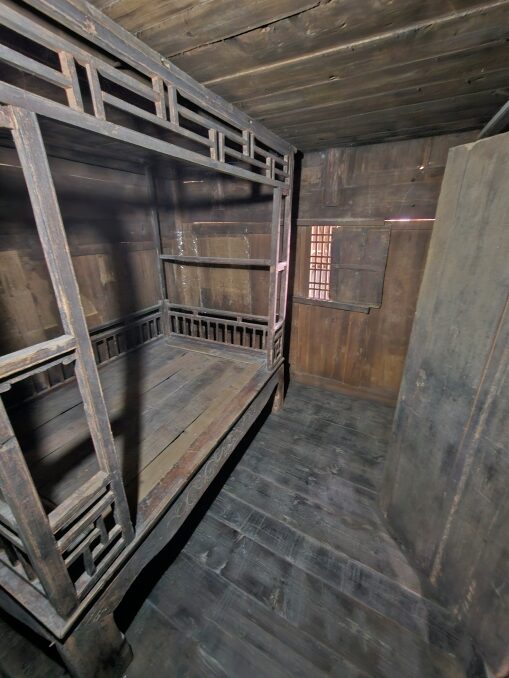
Bedrooms are seperated by thin bamboo walls and have small windows for fresh air, which keep the summer heat out and keep the room quite dark even in broad daylight ..

The beds are quite short for us westerners, but Chinese people fit well. In trains this also applies ;-). The room beneath is for the owner and a wife …

The room beneath is for a 2nd wife, children or personnel …
A Chinese counting frame, known as a suanpan (算盘), was lying on top of a cannister. It is a manual calculator that performs arithmetic through bead manipulation on rods. It enables rapid addition, subtraction, multiplication, division, and even square or cube roots via positional values and carries.
The rectangular wooden frame features a central horizontal beam dividing upper (heaven) and lower (earth) decks across 10-20 vertical rods. Each rod’s two upper beads count as 5 each, while five lower beads count as 1 each; beads slide toward the beam to activate values.

Upper Floor Room
One undivided attic room stacks grain on slatted racks for drying, with sloped eaves and small vents for airflow; minimal items keep it sparse and mold-free.

After this interesting visit inside one of the houses which were so common in this area, The Wandelgek walked out in to the bright blinding sun …
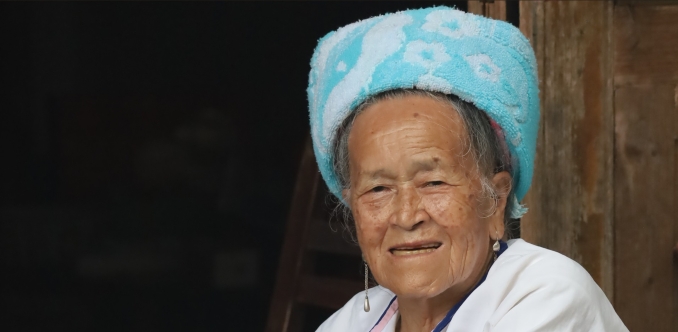
An friendly older woman was watching watching us as we went to explore more of the beautiful village …
Houses were built closely upon eachother …
A water trough…


I was quite surprised to see this image of what seemed to be three fish with one head. I asked Tao about it …

The three fish with one head motif in Chinese art and stone decorations symbolizes abundance, wealth, and unity, often interpreted as “year after year, plenty to spare” (nian nian you yu, 年年有余), where “fish” (yu, 鱼) puns with “surplus” (yu, 余).
This design evokes prosperity and harmony, with the shared head representing unity among the trio, ensuring continuous good fortune. It’s a folk auspicious emblem tied to fishing communities and festivals, appearing in paper-cuts, ceramics, and carvings like those at Longji rice terraces during the Qing dynasty.
While ancient roots trace to Egyptian tilapia and lotus motifs linked to Hathor (later adopted across cultures including Buddhism), in China it gained popularity in Yuan-era pottery and beyond as a secular wealth symbol rather than a specific legend. No singular mythological story dominates; it’s primarily a visual pun for material plenty.
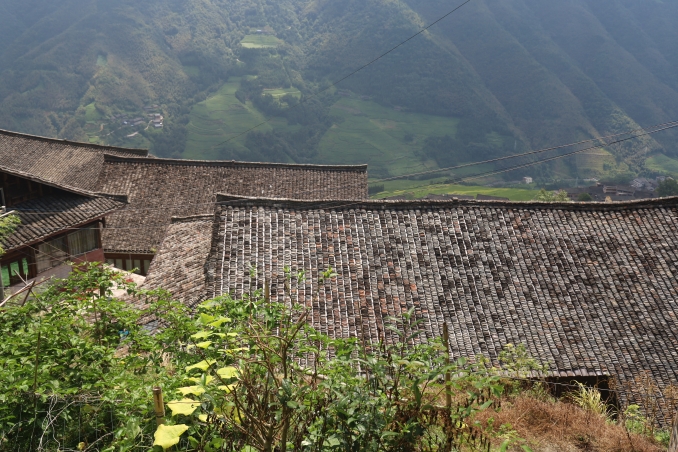
The village, glued to a steep hillside provided ample opportunities to photograph the roofs. The only other country I know where you can photograph such beautiful assemblies of ancient roofs is Italy with its terracotta roofs…
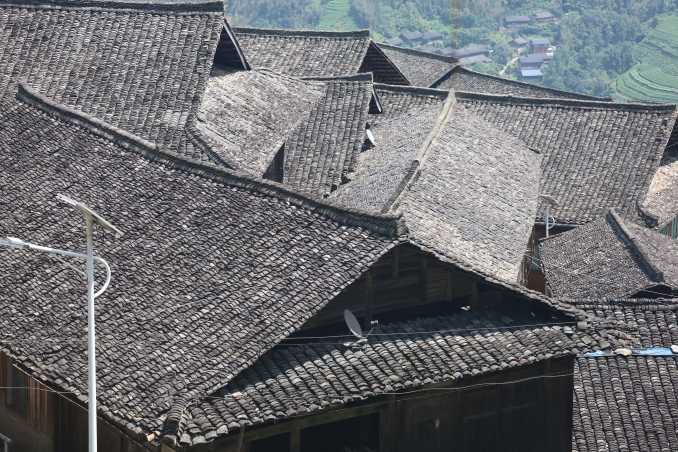
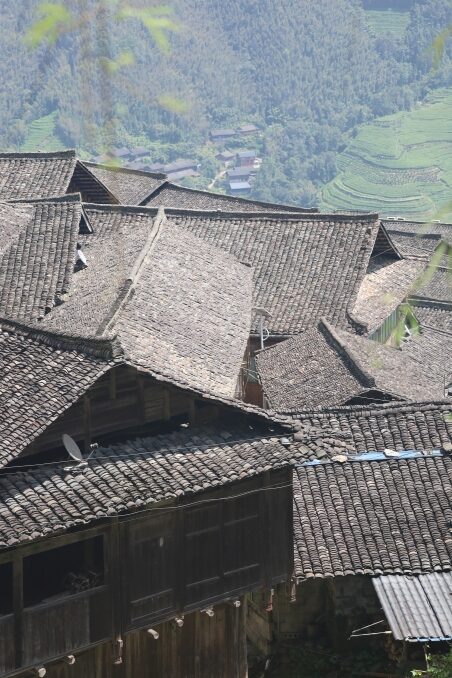
I know… it’s only roof tiles, but they are sooooo gorgeous ….

Then it was time to start the return walk …
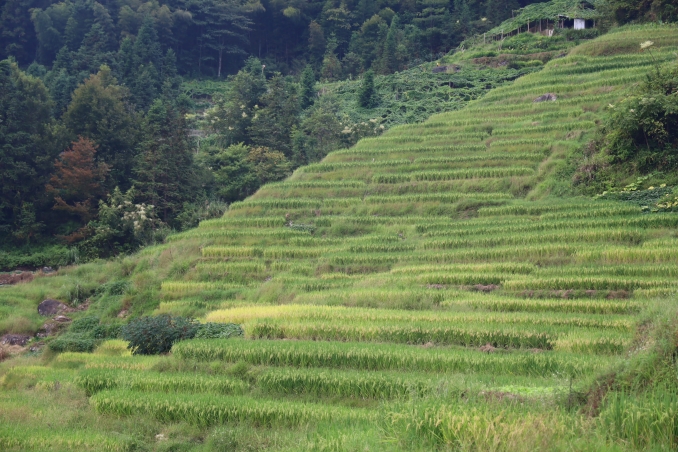
It got a bit more cloudy …
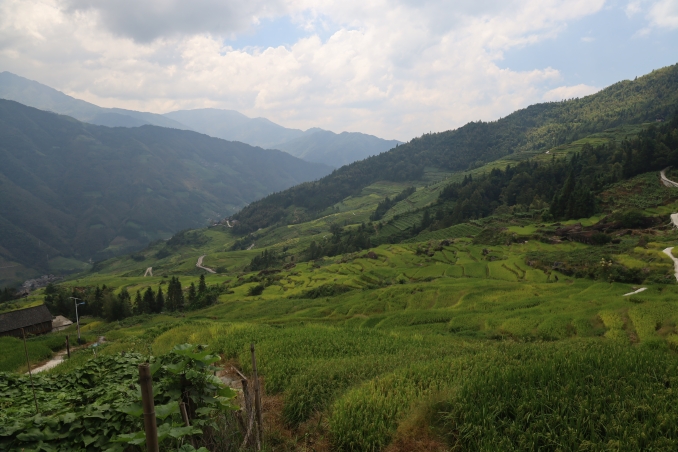
Again surrounded by awesome sights of the Longji dragon ridge and a last view (probably the last view ever) upon Longji village …
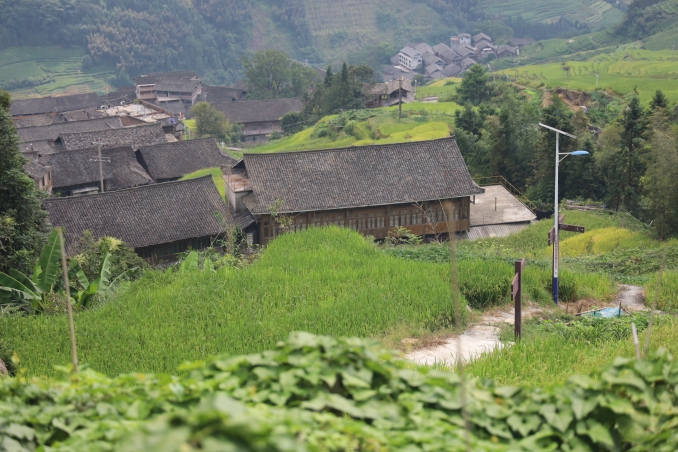
By afternoon, clouds began to gather, turning the sunlight diffused and silvery. On his return, the terraces glowed faintly, reflecting sky and haze in their flooded steps.
Farmers were finishing their day’s work, calling to each other as they made their way home.

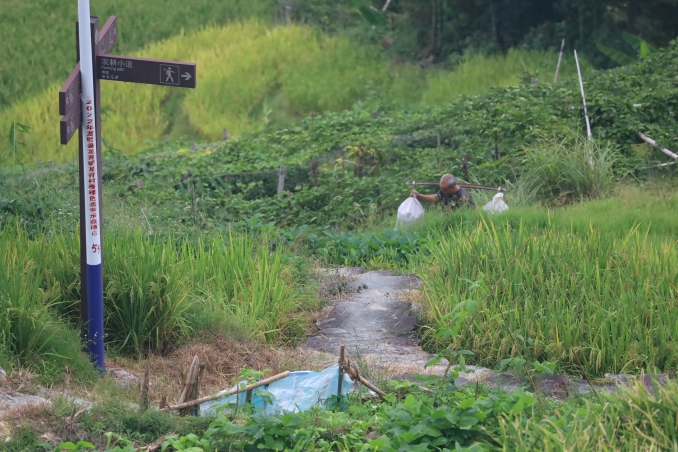
The Wandelgek followed the same winding path back — across the bridge, past the silent graves, and through the fading light toward Ping’An.
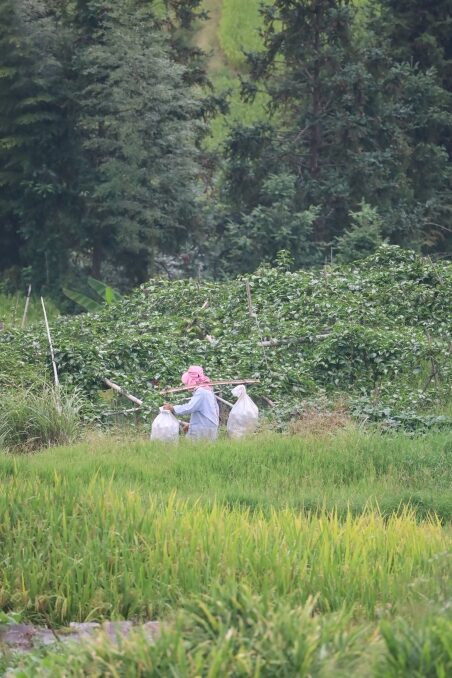
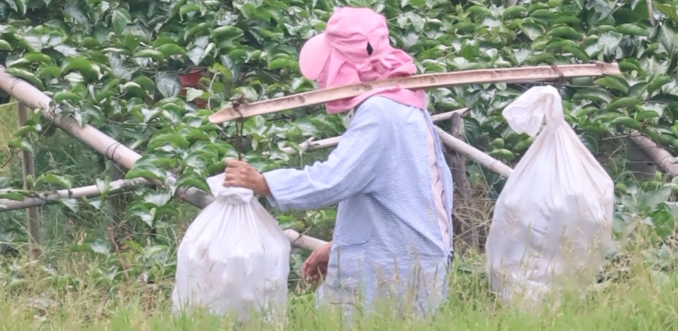
Farmers were still working as long as the light allowed them to …
There was also quite some “wildlife” to admire in the Longji dragon ridge hills, like e.g. these beautiful red and blue dragonflies …

It took quite some patience to get this butterfly to spread its wings …


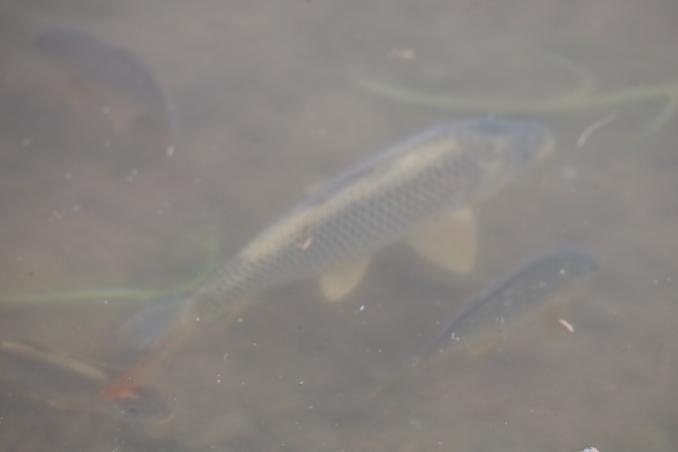
Koi Carps were swimming in the rice fields …
“Then I said, “hi”, like a spider to a fly”
and
“I said my, my, like the spider to the fly”
From: Spider and Fly by The Rolling Stones
always made me think of the poem “The Spider and the Fly” by Mary Howitt (1799–1888) and the sentence: ‘Will you walk into my parlour?’ said the Spider to the Fly.”


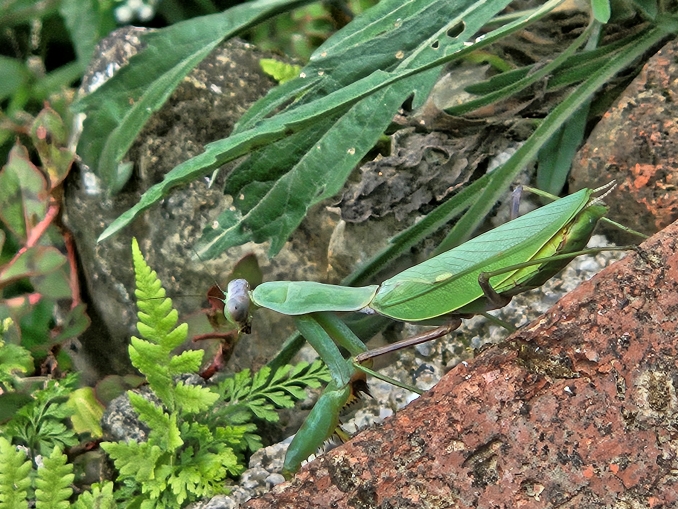
A Praying Mantis was not far away 🤣😂 …
When he reached the village again, the first lanterns had already been lit. Their soft glow twinkled between houses, mirrors of the terraces’ curves in the darkening night. The mountains folded themselves around the valley, protective and unchanging, as The Wandelgek looked back, quietly content after a day spent walking through the living heart of the Zhuang lands.
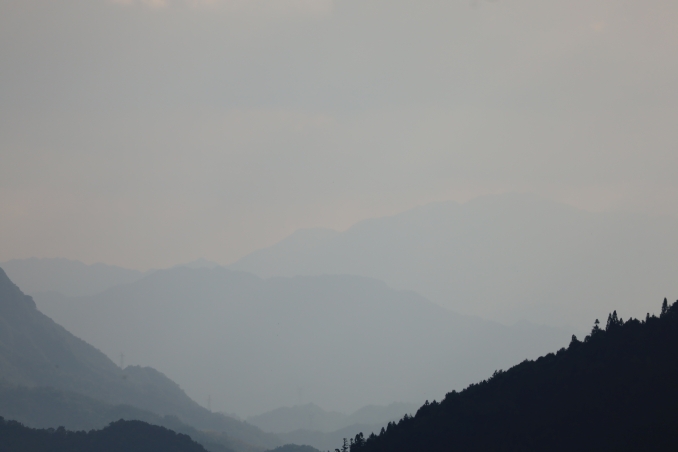
This was almost it. The last evening and night in China…. for now.
Tomorrow would still be a nerving travel daybto leave China before the visum free window of 14 nights and 15 days expired.