Monschau city walk(s): Fairy Tale town in the German Eifel (High Fenn – Eifel Nature Park)
Monschau
Although this walk was really on-the-go, we still extensively used the walk description gathered today in Monschau at the Fremdenverkehrsamt of the series: Wanderbares Monschau: Unterwegs in Monschau:
- (15) Der Rote Faden – Durch die Stadt de Tuchmacher, 2,3 km Spaziergang


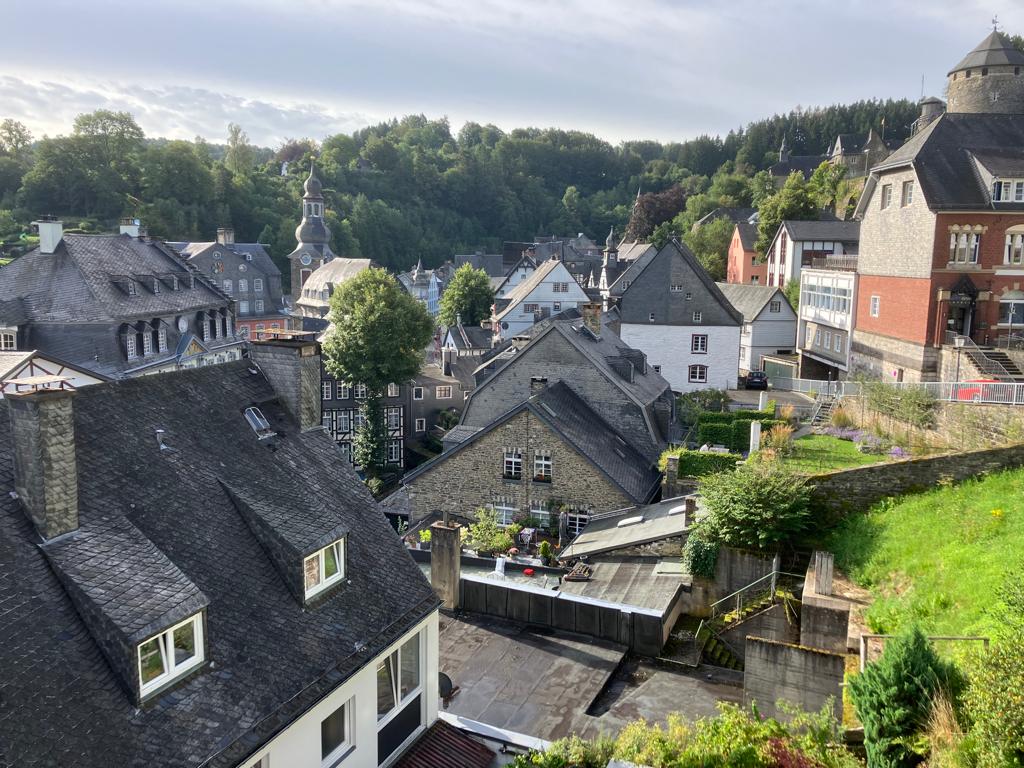
Monschau is a small resort town in the Eifel region of western Germany, located in the Aachen district of North Rhine-Westphalia.
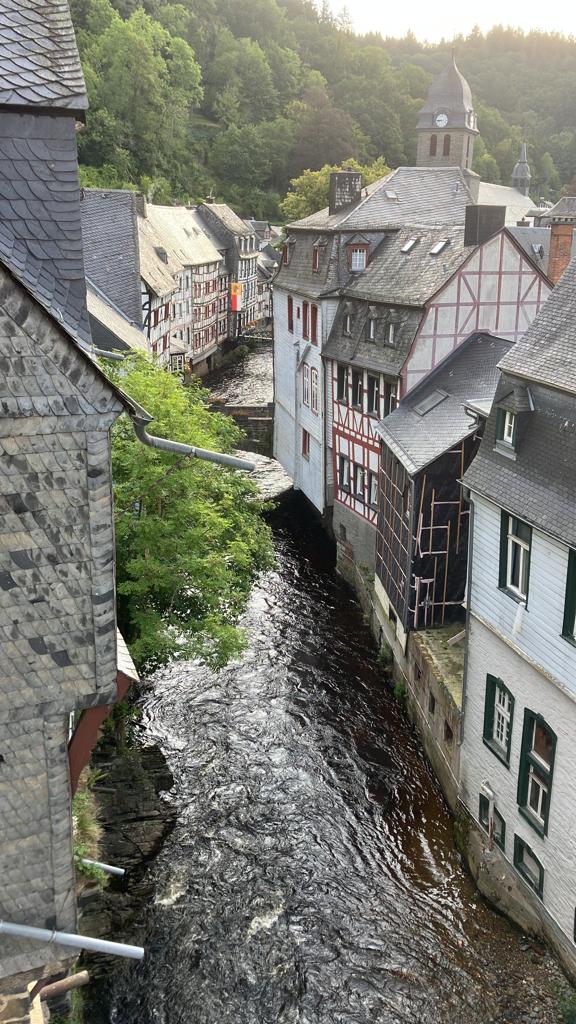
The town is located in the hills of the North Eifel, within the Hohes Venn – Eifel Nature Park in the narrow valley of the Rur river.
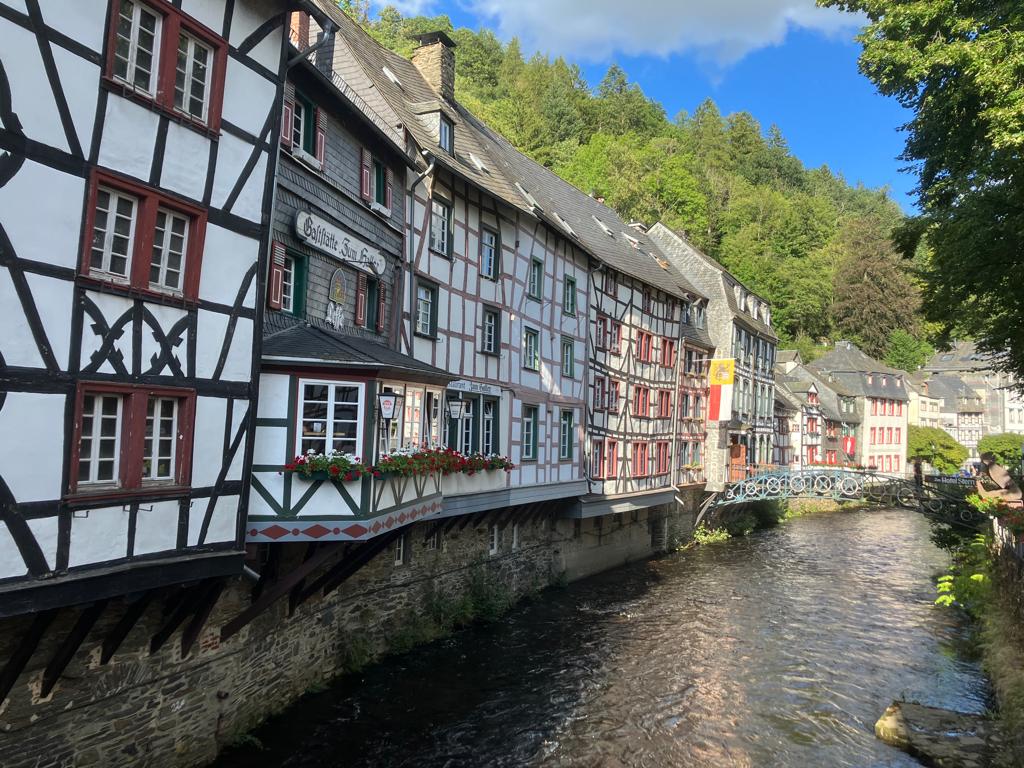
The historic town center has many preserved half-timbered houses and narrow streets have remained nearly unchanged for 300 years, making the town a popular tourist attraction nowadays.
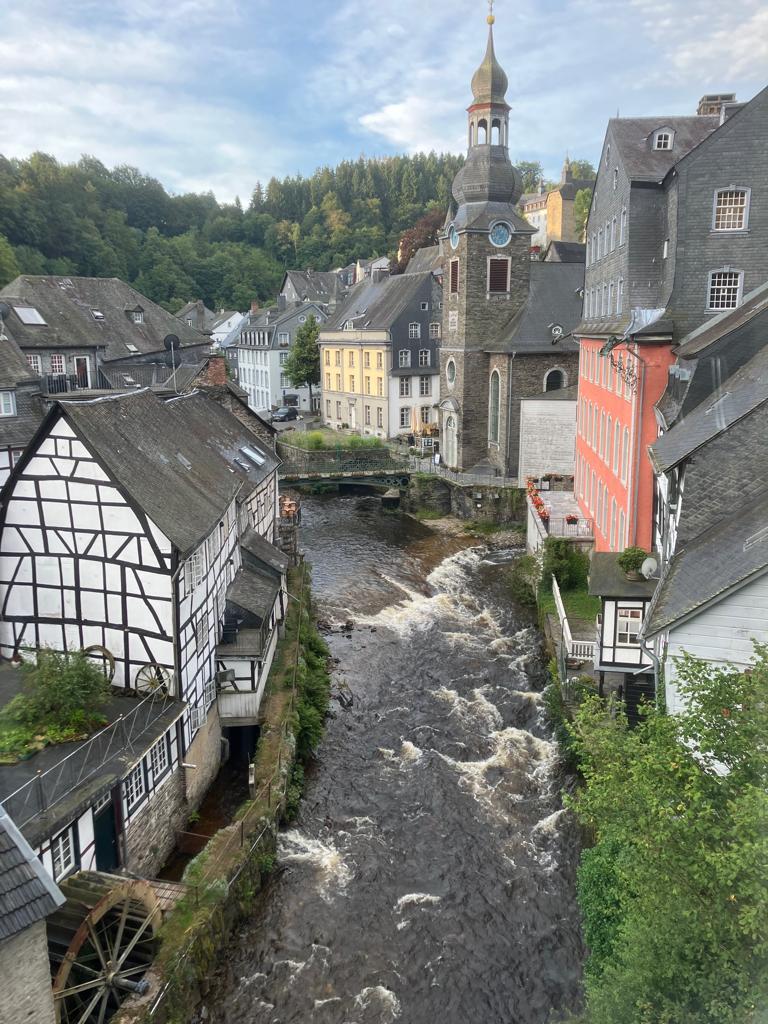
Historically, the main industry of the town was cloth-mills. Monschau, which is allowed to call itself a Luftkurort (health resort) since 1996, attracts many visitors with its picturesque views especially in the warm months.
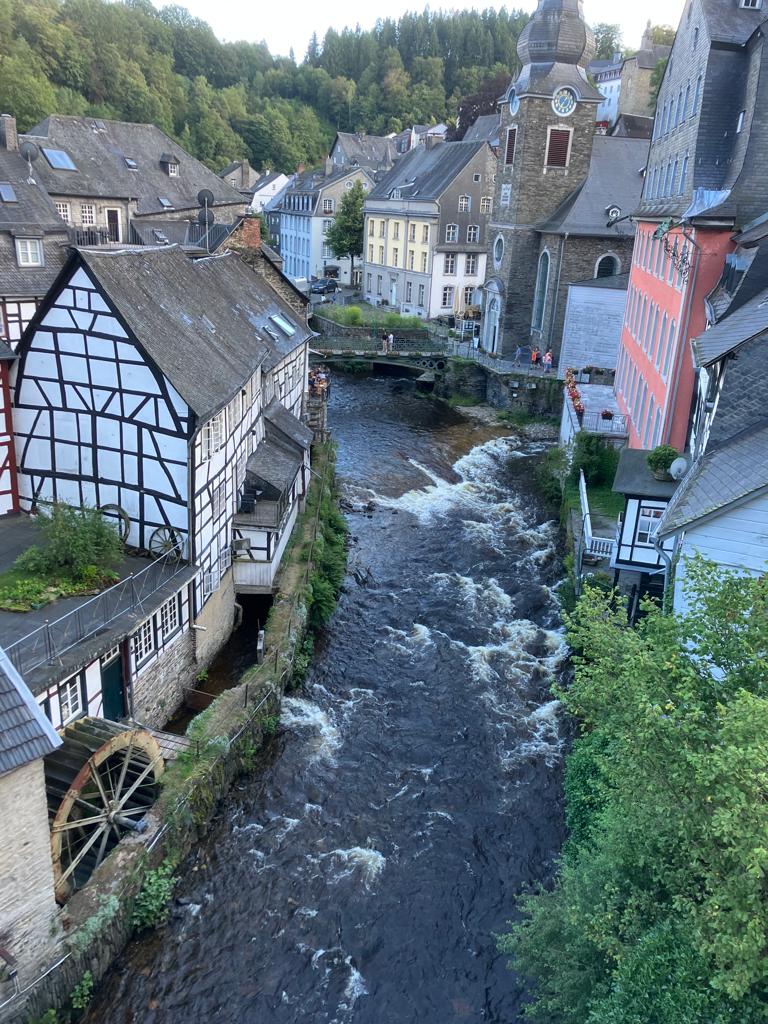
Set in the medieval town facility that is traversed by the river Rur, it is dominated by slate paneled and half-timbered houses with cafes, restaurants, craft and souvenir shops.
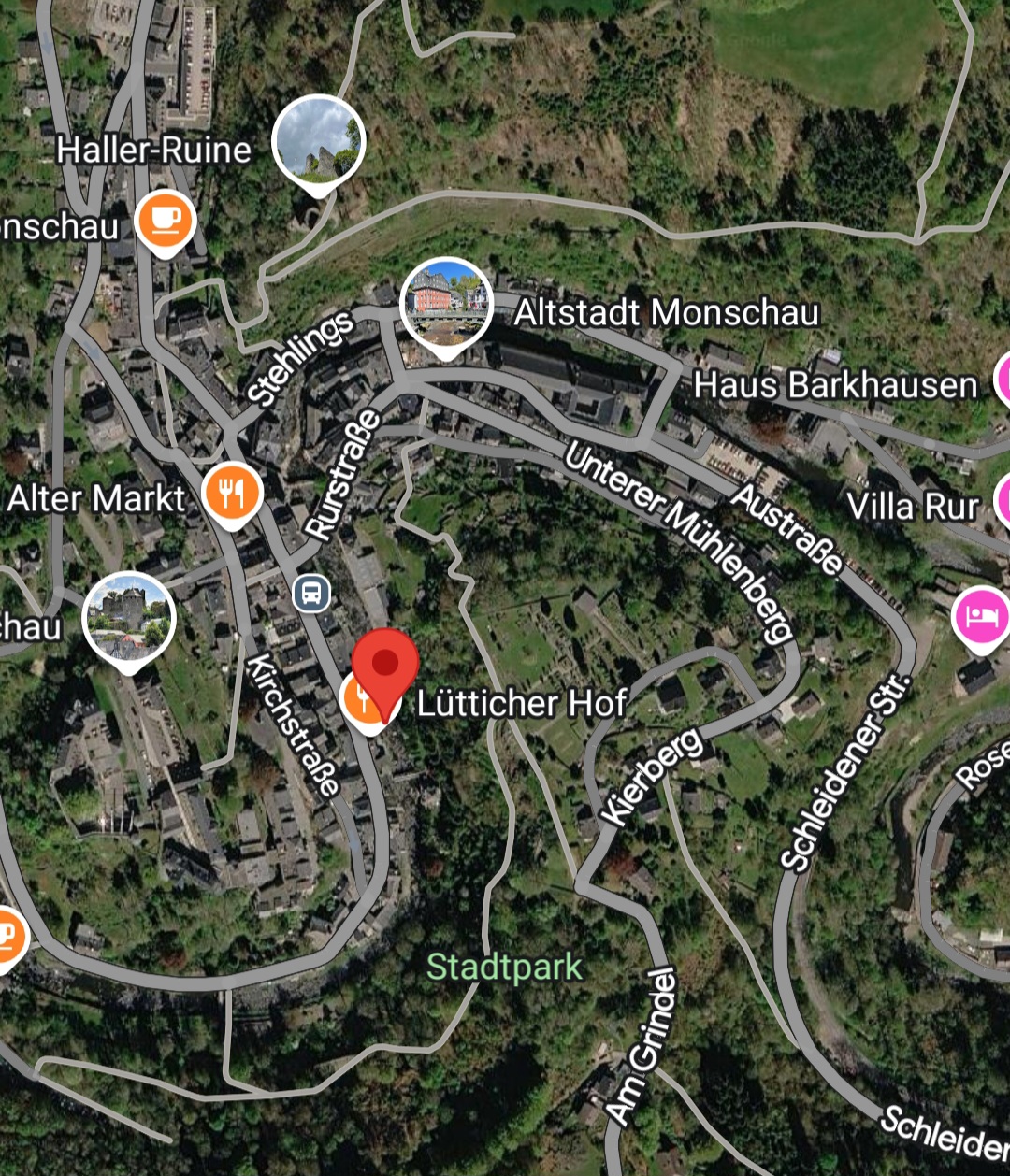
Monschau Center Map
Parking places are placed around the city center.
Citywalk Monschau
After having finished the Pejo-Weiß-Weg, The Wandelgek decided to do a small city walk in Monschau itself.
Das Rote Haus / The Red Home
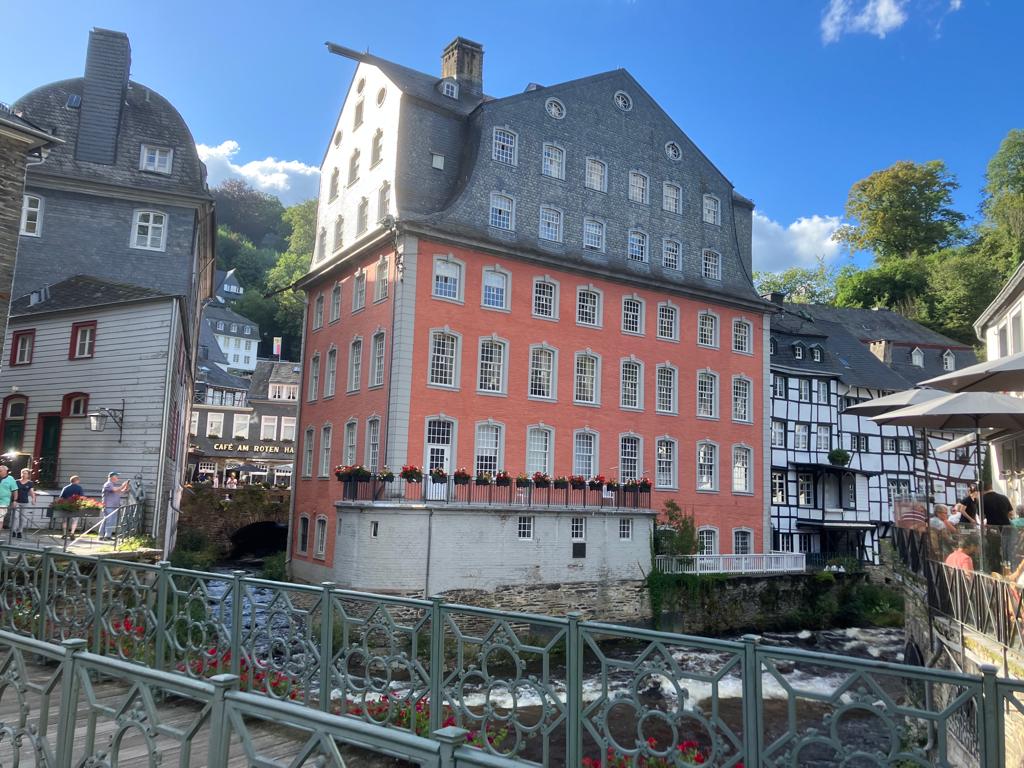

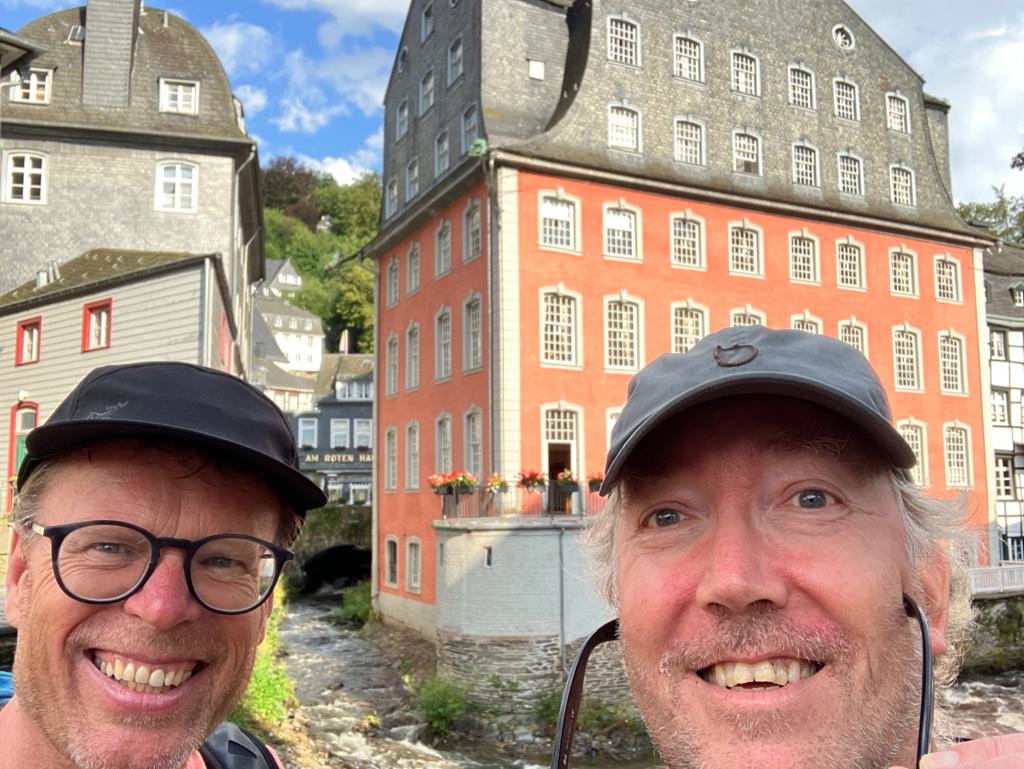
Nowadays the Rotes Haus is a museum.
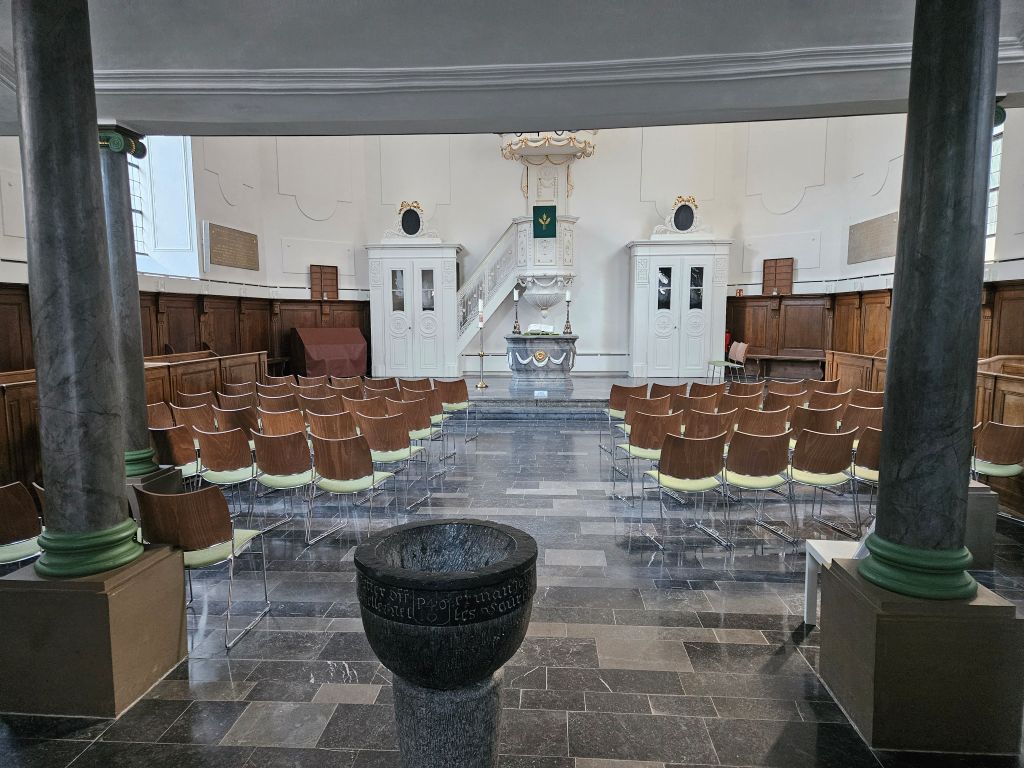
Next to the Rotes Haus was a church …

The door was open and we entered briefly, but it was not the most beautiful interior to be honest …
So we quickly went outside again and roamed a bit through the old town near the river Rur, which showed us a lot about how this town was built, knowing the river will flood once and a while. Near the river all half-timbered houses are at the lower level built of stone, thus being able to withstand the force of flooding water. On top of that stone base are the half-timbered houses …


It was really fun to reach all these places where we could see the stone bases of the half-timbered houses, because it meant roaming through the narrowest alleys of the town, which really is my cup-of-tea …


Next we just roamed through the many pituresque streets of Monschau, discovering lots of bronze statues of old crafts at the Weaver’s Well …

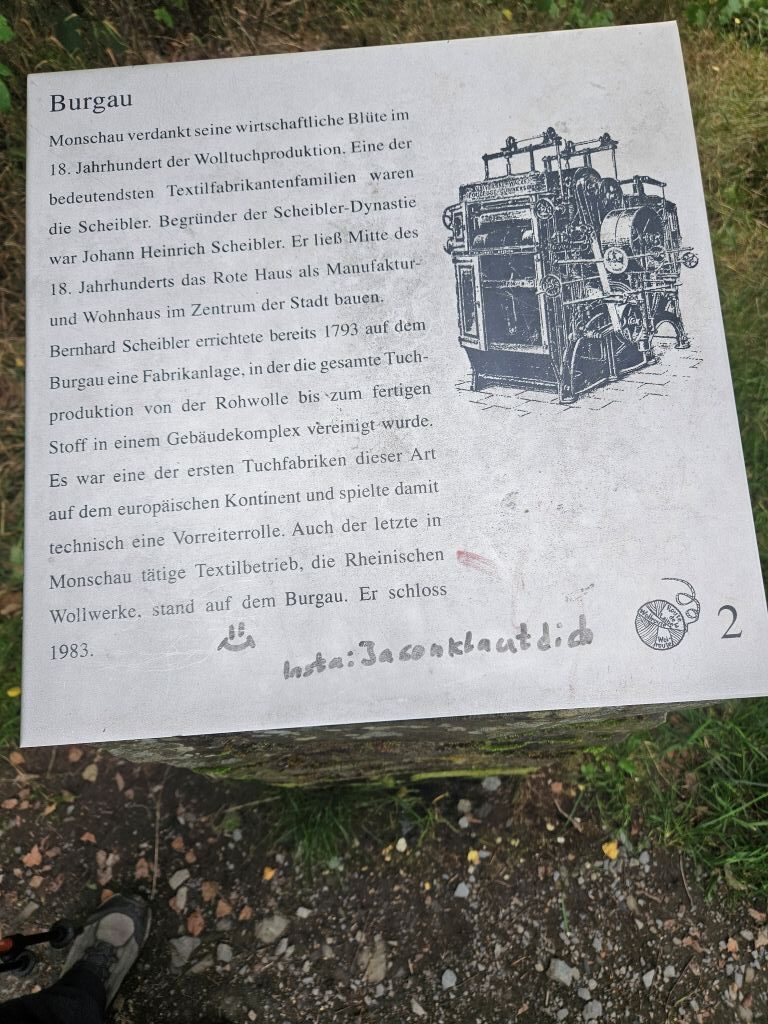

… , like e.g: the Dyer (Färber) and the Sheep Shearer (Schaf Scherer) that were long ago common in Monschau, …


The most important craft however was that of The Weaver (German: Der Weber):

The weavers and cloth makers were the foundational architects of Monschau’s wealth, growth, and identity. During the 18th century, the textile industry transformed this remote Eifel town into a globally renowned epicenter for ultra-high-quality woolen fabrics.
By late afternoon, Monschau has already begun to loosen its grip on the ordinary…


Time behaves strangely here. A clock chimes somewhere, but not the hour you expect. A door closes softly in a street you have not yet reached.
It was nice to have a choice from many outdoor terraces in often on beautiful squares, to enjoy a coffee …


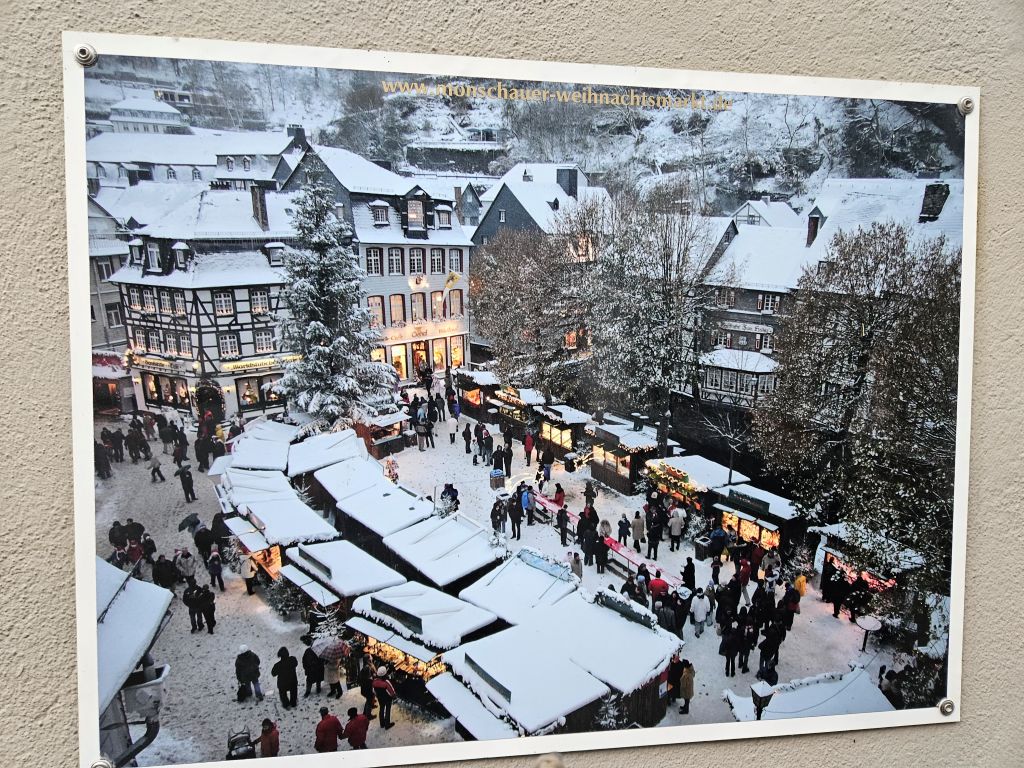
Weather was quite hot and it was rather difficult to imagine this village in winter, but this poster of a Christmas Market made it easy …
A small mini library drew my attention. Love those initiatives of which I saw the 1st examples in England, where classic red phone boots were in danger of disappearing due to the cell phone’s triumphant uprising. But in many vilkages and town locals thought of new destinations for their phone boots. A mini library was just one of many possibilities …


We now walked through the outskirst of the town. The streets were often steep …


The scent of warm pastries lingers long after you pass the bakery—or perhaps before you find it. His companion began to notice it too, glancing back more often than forward, indicating it was dinner time. Quickly they sought for a suitable place to eat and an outdoor terrace was a plus …


The Rur flows, though “flows” feels too certain a word. It glides, perhaps, or dreams itself forward—its reflections arriving a heartbeat before the things they mirror. He paused on a small bridge. For a moment, he was unsure which world is above and which is below.

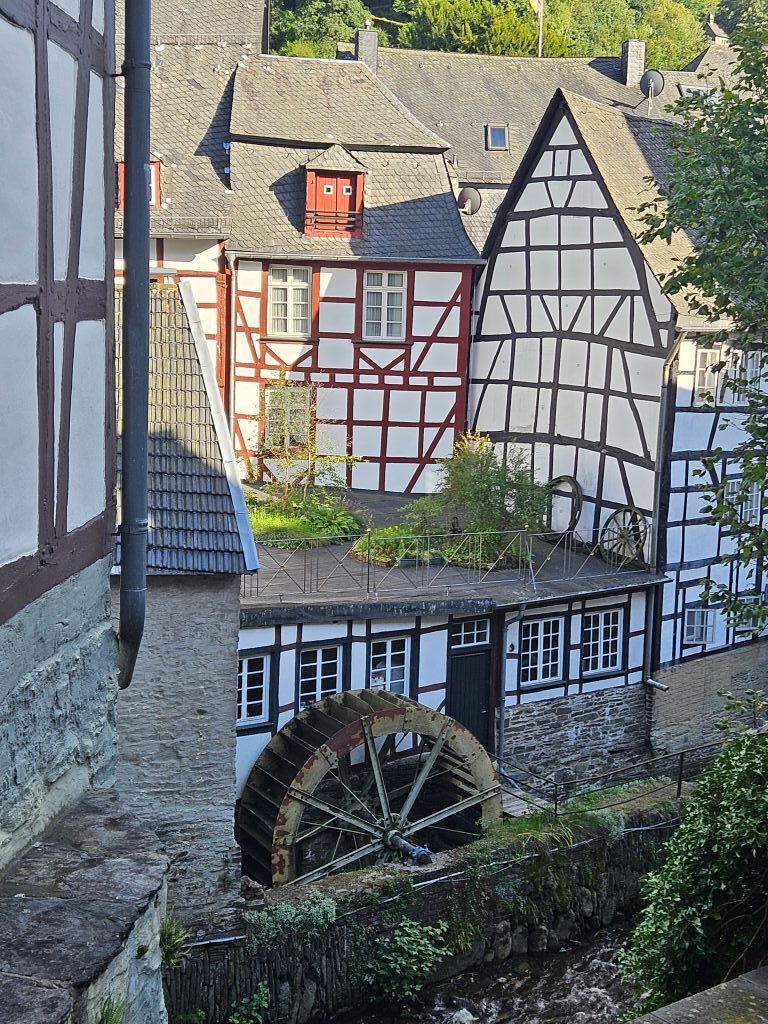
Watermills were absolutely central to Monschau’s weaving and textile history. While weavers did the actual interlacing of threads by hand in their homes, the industrial process of transforming raw wool into high-end luxury fabric relied entirely on the mechanical power of the river.
The Wandelgek felt as if stepping not through a town, but through a half-remembered tale. The road behind him faded quickly, swallowed by trees and silence, while ahead the houses leaned inward, as though conspiring to keep the world out.
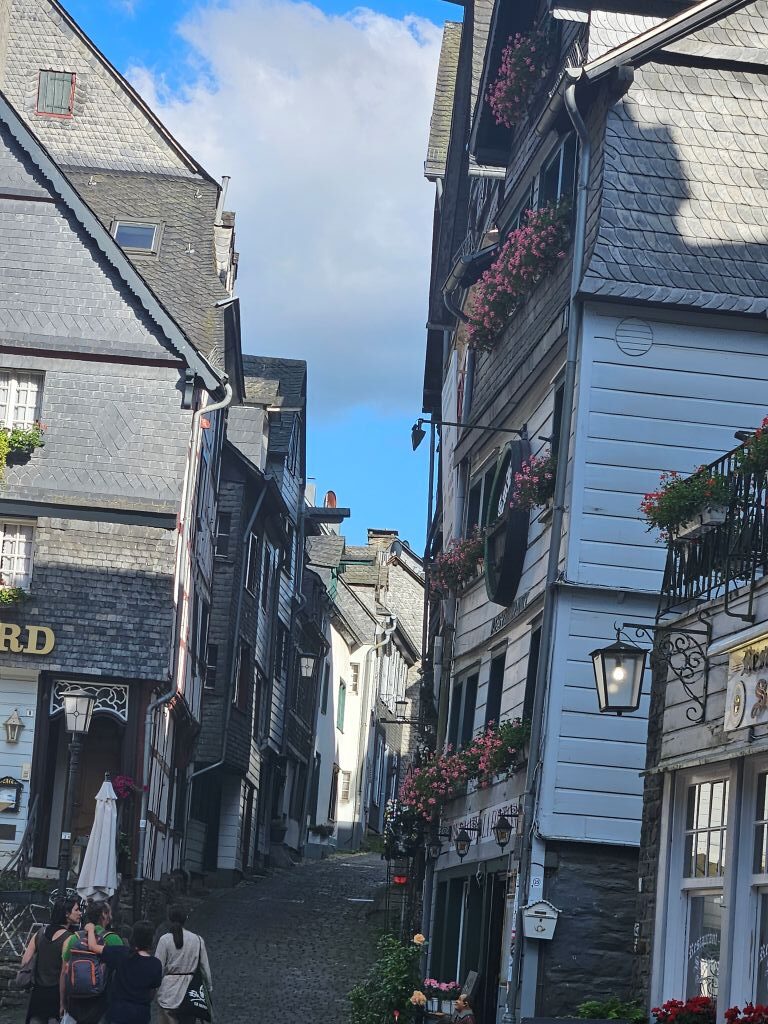
Nothing stands quite straight. He knew this was not Diagon Alley, but it could’ve been. Timber frames tilt at improbable angles, windows blink in uneven rows, and the cobblestones ripple faintly beneath your feet, like the surface of a quiet stream.
As evening gathers, the light does not fade; it deepens. Gold becomes amber, amber becomes a slow-burning crimson that settles into the beams of the houses. The castle above shifts in silhouette, no longer entirely stone, no longer entirely ruin—watching, or remembering.
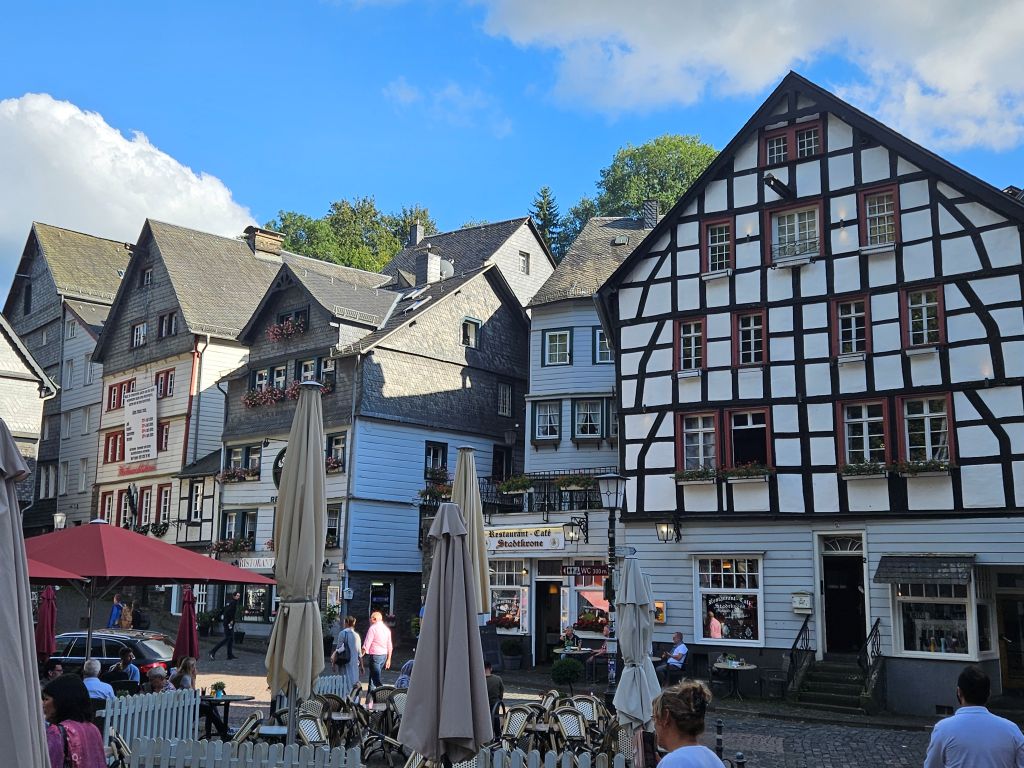
He walked without deciding where to go and reached this beautiful, lively square and yet another church. This was the: Aukirche.
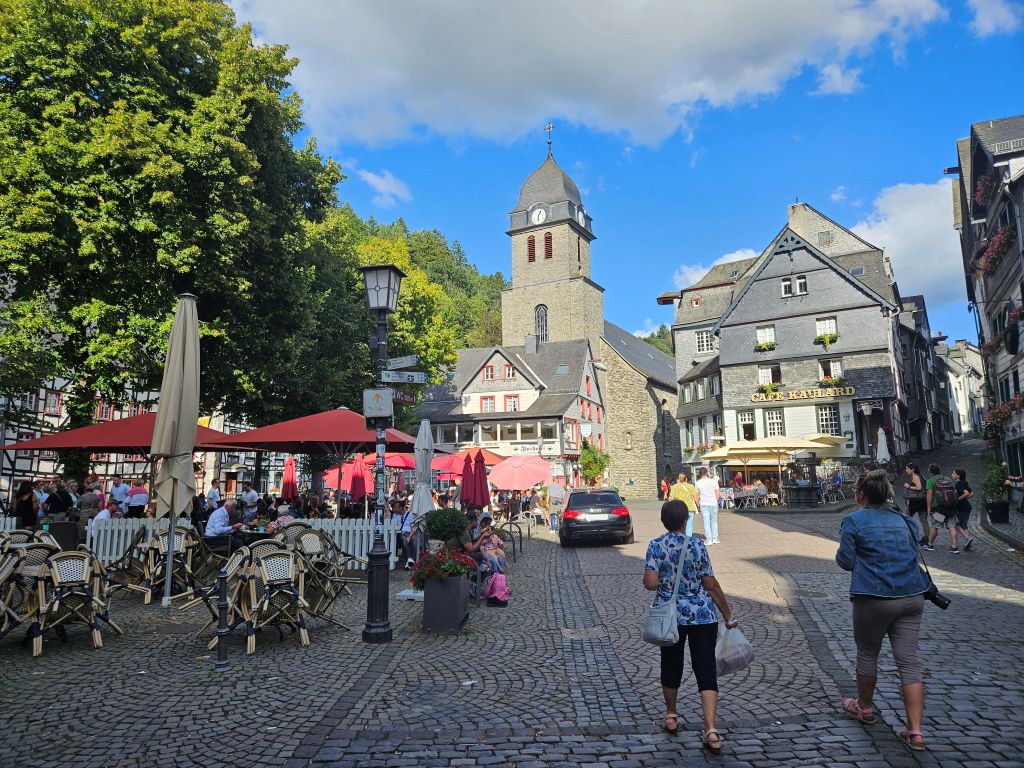
Streets fold into one another like pages, and yet he never felt lost. Or perhaps he was lost, but in the way one is inside a story—exactly where he meant to be.
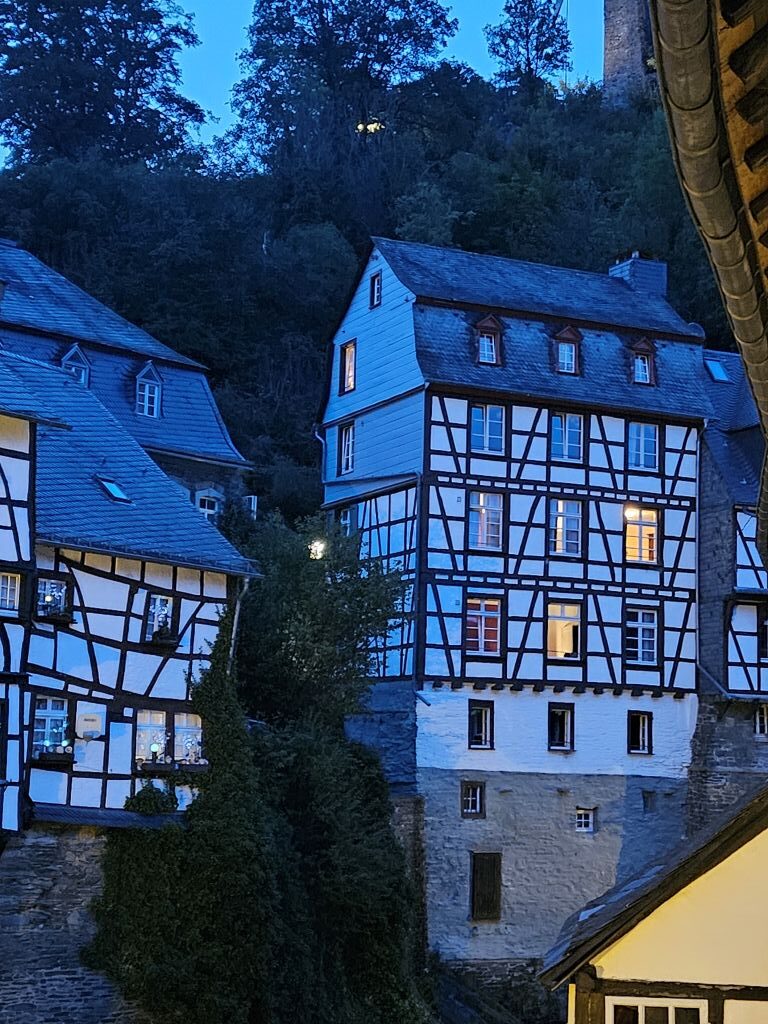
Lanterns awaken one by one, though he never saw who lights them.
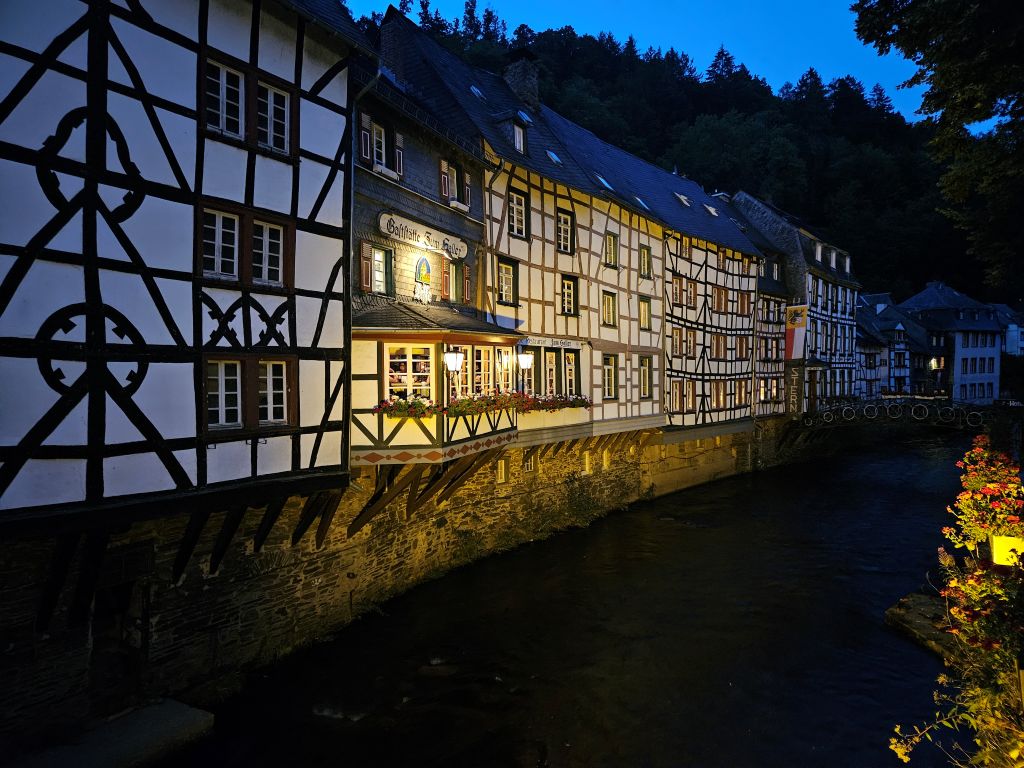
Their glow is soft and knowing. In their light, his companion’s face seemed briefly unfamiliar, as though belonging to another century, another telling of this same walk. You wonder, fleetingly, whether you look the same to him.
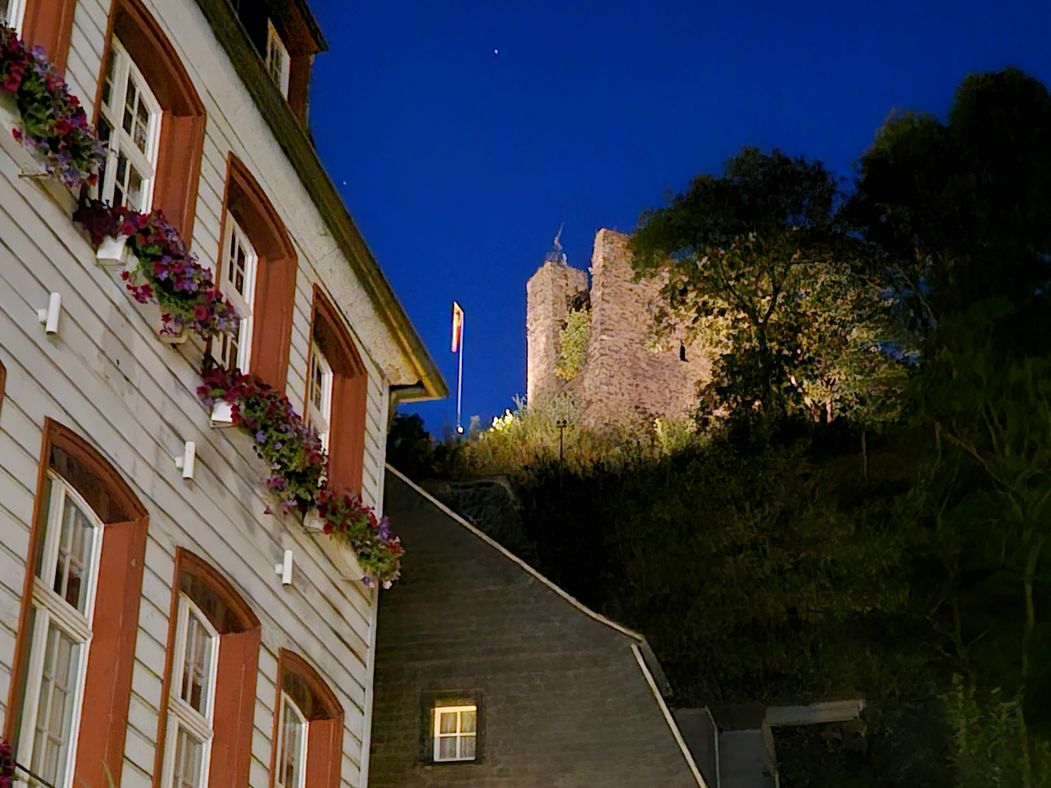
The river darkened to ink. The first stars appear—not above, but within it.
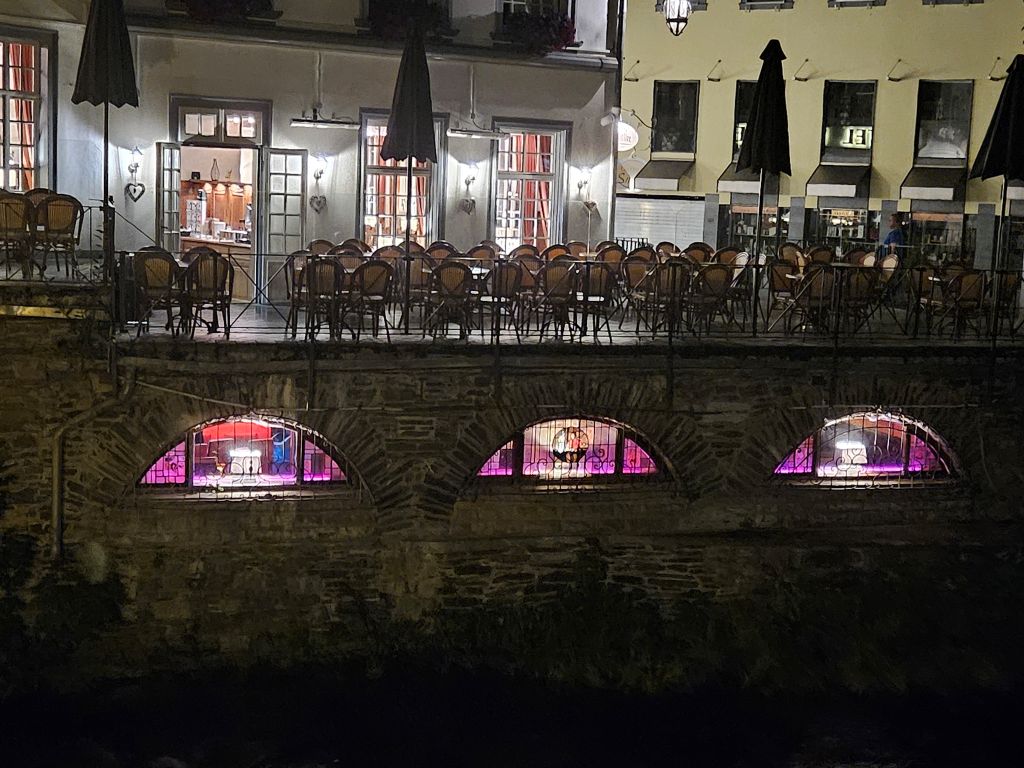
And Monschau, now fully unmoored from the day, drew closer around them. The streets quiet apart from a bit of noise coming from the occasional pub, yet the silence feels full, as though something just out of sight is gently turning the next page.
They could’ve left, perhaps.
It was time to get out of this dreamy mood and enjoy some of the more earthly delights of this town.
Drinks!!
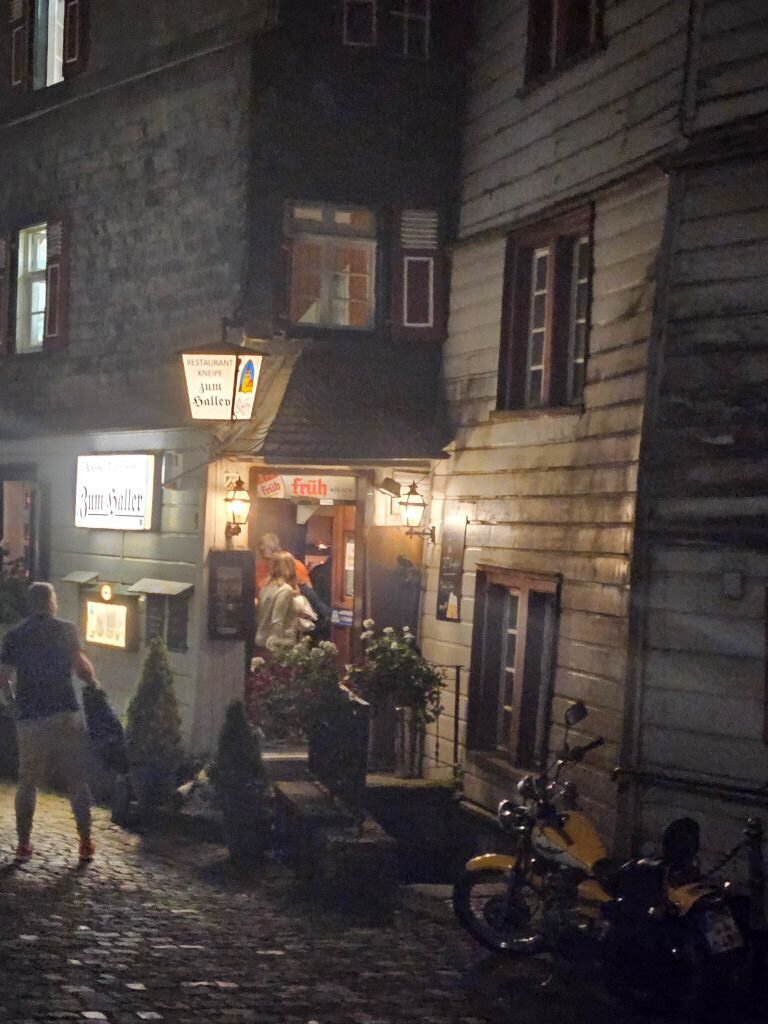
It turned out that in a lot of the pubs, restaurants and even shops, it was not possoble to pay digitally by debit or credit card and when we 1st discovered this I had to find a bank with ATM to withdraw money and return to the pub to pay our bill. Even in Germany modern society is not omni present …
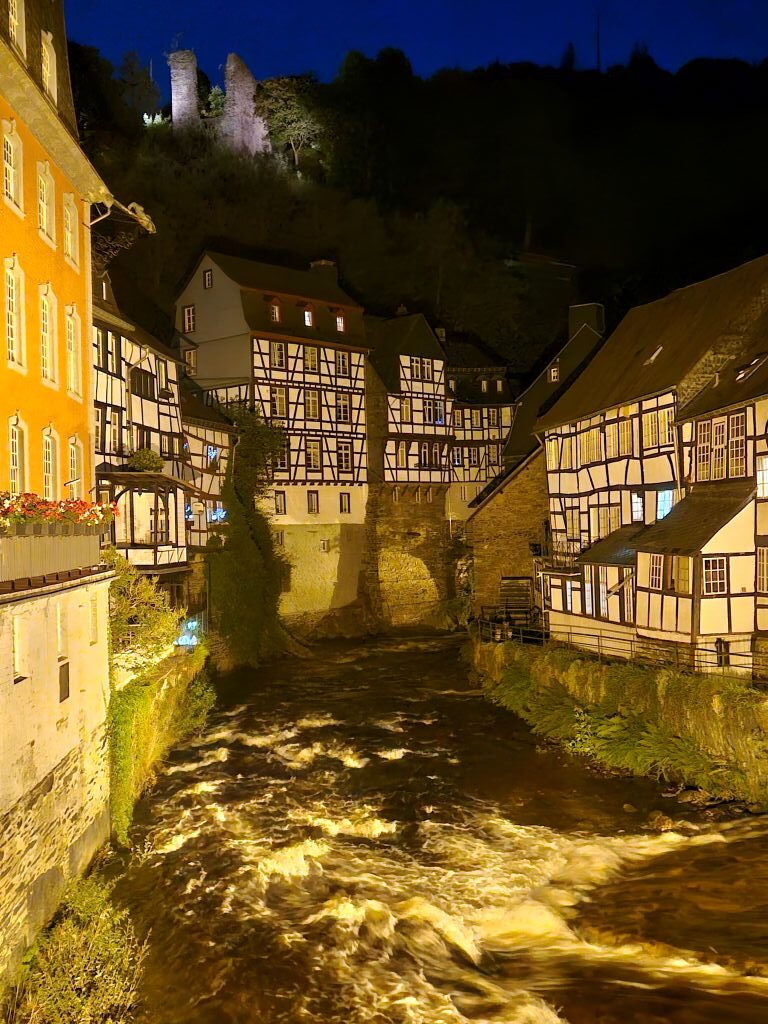
But as they stood together on the bridge once more, watching reflections that no longer matched the sky, they both understood the same quiet truth:
They wouldn’t remember the way out.
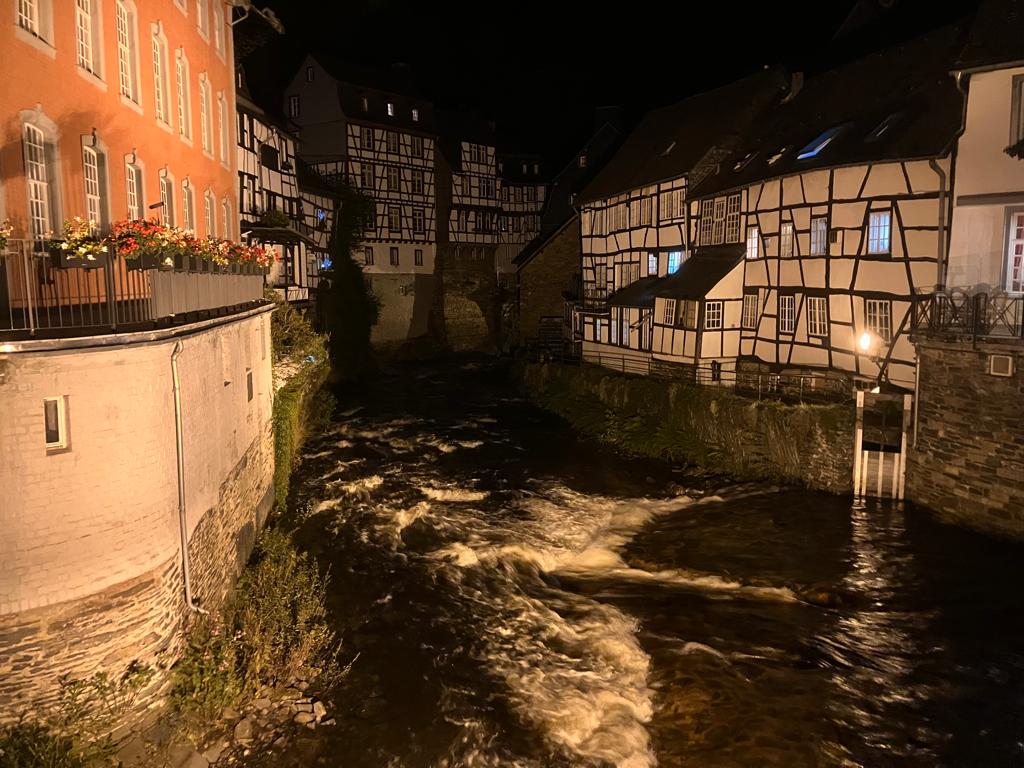


Only that, once, they wandered here—
and the town kept a small part of them,
folded somewhere between its crooked beams and endless evening.
It was time to get out of this dreamy mood and enjoy some of the more earthly delights of this town.
Drinks!

So this was what our late afternoons, evenings (most pubs and restaurants were closed at about 23.00 hrs) in Monschau were like.
But it also meant that after going early to bed, we could start early with what we really came for: Walks!