
An illustrated history of Interactive books Part 10: Succession of Sabuda and Reinhart from Asia’s Iran and China, by The Booknook Librarian (21st century)
Succession?
Were or are Sabuda and Reinhart unrivaled or is there possible succession?
Well if there is succession, and I think there is, it does not come from Europe or the US, but from China and other Asian countries like e.g. Iran.
In the 21st century there are a lot of very impressive pop up books originating in China available.
Asian pop-up artists from Iran, China, and beyond have innovated in the 21st century by blending cultural heritage, folklore, and modern paper engineering, often focusing on epic narratives, ethnic identities, and interactive storytelling. Iranian creators draw from Persian mythology like the Shahnameh, while Chinese artists explore minority cultures and ancient poetry through oversized, photographic pop-ups. Their work has gained international acclaim via exhibitions, awards, and collaborations, though distribution challenges persist due to politics and production costs.
Shift in used materials
One of the main differences seen in Asian and specificly Chinese pop up books, is the use of different materials than exclusively paper or paperboard. Plastics, see-through or material covered in silver like wraps or glitters are common. Sabuda and Reinhart did use such materials (like e.g. rope or a straw), but sparsely, the Chinese and in less multitude the Iranian) books are containing much more of such materials and some are rather rare like e.g. small feathers.
Iranian Pop-Up Artists
Hamid Rahmanian
Hamid Rahmanian, an Iranian-American artist and director, has revitalized Persian epics through intricate pop-ups; his The Seven Trials of Rostam (2022, with paper engineer Simon Arizpe) depicts the hero’s battles against demons and witches from the Shahnameh, featuring 12 mechanics across 8 pages in a limited edition (reprinting Spring 2026).
Zahhak
The award-winning Iranian pop-up book Zahhak: The Legend of the Serpent King brings one of the most iconic tales from the Shahnameh, the thousand-year-old Persian Book of Kings, to life in a breathtaking three-dimensional spectacle.
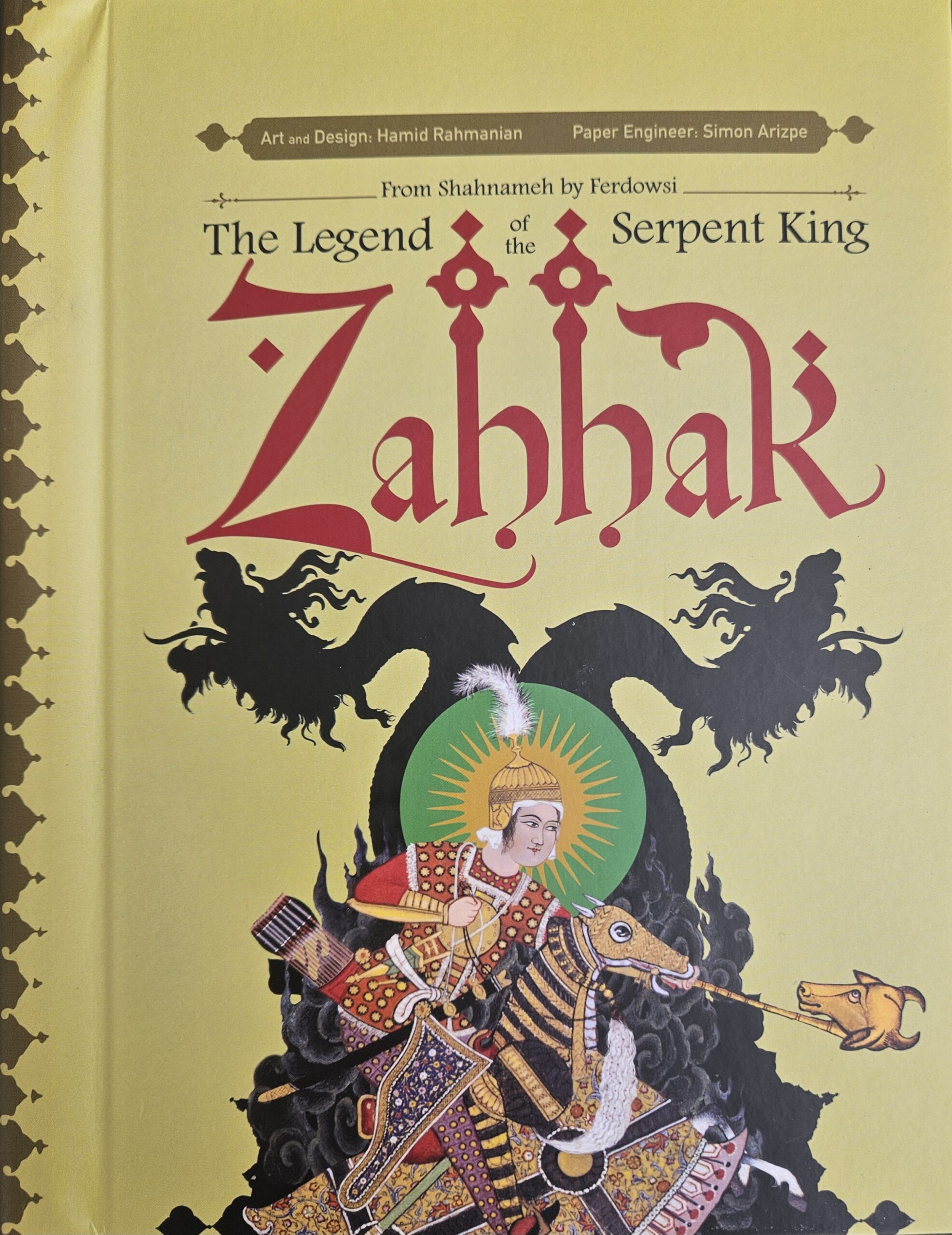
This visual masterpiece was illustrated by the acclaimed Iranian artist Hamid Rahmanian, while the complex paper engineering was designed by the renowned American paper engineer Simon Arizpe. The English edition was published in October 2018 by the well-known independent publisher Fantagraphics. Much like the architectural books of Wang Wei, this work achieved high international acclaim and won the prestigious Meggendorfer Prize for the best pop-up book in the world. Read more about who Lothar Meggendorfer was in my previous blogpost:
The overall vibe of the book radiates a dark, mythological drama, rich Persian tradition, and theatrical suspense. Rahmanian’s illustrations are deeply rooted in classical Persian miniature art, filled with vibrant, contrasting colors and incredibly detailed patterns found in clothing and army tents.
Because the story revolves around a young prince tempted by the devil to murder his father, subsequently transforming into a tyrannical king with bloodthirsty serpents growing from his shoulders, the tone feels mystical and ominous. It is a visual epic that makes the fine line between temptation, corruption, and heroic justice entirely tangible.
Interactivity and the pop-up format hold a deep meaning in this book, serving as a dynamic, three-dimensional translation of ancient poetry and mythology. Instead of the static text found in Ferdowsi‘s original epic, the paper engineering ensures that transformations and battles literally leap off the page. The interactivity grants the reader physical control over the metamorphosis of the characters. When a page opens, the terrifying serpents rise dramatically from King Zahhak’s shoulders. These tactile mechanics heighten the emotional impact of the story, making a millennium-old oral and literary tradition instantly accessible and immersive for a modern, international audience.
While this book does not unfold into one long, continuous accordion landscape like Wang Wei‘s palace books, it (and the later Rostam) utilizes an ingenious multi-layered foldout structure per page that strongly echoes the style of Matthew Reinhart and Robert Sabuda (more about that later in this blogpost). Sabuda even acknowledged he didn’t see a book as astonishing as this one for a long while. Simon Arizpe designed the spreads so that each page builds up from multiple angles and depths, often featuring two massive pop-up structures per spread alongside additional hidden foldout flaps. Just as Matthew Reinhart creates a sense of kinetic theater in his legendary pop-up books about pop culture, Zahhak employs similar gravity-defying engineering techniques. Where Reinhart uses his mechanics for fictional pop-culture worlds, Arizpe utilizes these grand, three-dimensional explosions to capture the monumental scale of legendary Persian castles, advancing dragon armies, and epic confrontations. The result is a perfect fusion of Western pop-up technology and Eastern visual art.
Rostam
This follows his award-winning Zahhak: The Legend of the Serpent King (2018), which won the Meggendorfer Prize for best pop-up and inspired workshops on Shahnameh adaptations.
Rahmanian’s books emphasize vibrant illustrations and cultural preservation, produced at Fictionville Studio with support from Iranian diaspora foundations.
EXAMPLE from:

The Seven Trials of Rostam is a stunning pop-up book by artist and designer Hamid Rahmanian, with paper engineering by Simon Arizpe and text by Melissa Hibbard, produced by Fictionville Studio in a limited run of 4500 English-Persian bilingual copies around 2022, housed in a slipcase with 8 intricate pages depicting the legendary hero Rostam‘s perilous quest to rescue Iran’s foolish King Kay Kavous from the White Demon in enchanted Mazandaran.
This work adapts a core episode from Ferdowsi‘s 10th-century epic Shahnameh, showcasing Rostam‘s battles against wild animals, demons, witches, and more alongside his loyal horse Rakhsh, transforming ancient Persian mythology into a vibrant, handmade interactive experience that celebrates cultural heritage through tactile storytelling.

Rahmanian’s book follows Rostam‘s seven heroic trials in sequence, with each spread bursting into dynamic scenes of combat and peril, blending traditional Persian motifs with modern illustration to educate and immerse readers in Iran’s mythic past, much like his prior award-winning pop-up Zahhak: The Legend of the Serpent King.
The bilingual format and enclosed instructional video enhance accessibility, turning a linear epic into a multidimensional adventure.

Featuring 12 elaborate mechanics across its pages, the book employs advanced paper engineering like layered demon battles, animal assaults, and magical transformations, all handcrafted for seamless operation and visual drama, building on Arizpe‘s expertise from previous collaborations.
Its compact yet explosive designs showcase precision in multi-plane movements and hidden reveals, optimized for limited-edition production.
Following the Meggendorfer Prize-winning Zahhak, this title advanced pop-up adaptations of non-Western epics, proving handmade complexity viable for niche cultural narratives and inspiring further Shahnameh projects like the upcoming Epic Adventures of Shahnameh pop-up slated for 2026.
Rahmanian’s success elevated Persian storytelling in global interactive publishing, fostering demand for artist-led, heritage-focused engineering.
Although the design and storytelling are Iranian, the paper engineering is still American. Developments in China changed that too…
Chinese Pop-Up Artists
This started with a magical exhuberant pop up book version of a Chinese classic named: Journey to the West. It’s rather unexpected commercial succes led to a boom in Chinese publications of pop up books, which before was suprisingly non present in tge country where paper was invented.
Zhou Meiqiang
Zhou Meiqiang is a contemporary Chinese paper engineer and pop-up book designer recognized for his ability to translate classical literary heritage into approachable, three-dimensional formats. He began developing his specialized craft by focusing on how to make intricate movable structures both affordable and accessible for mainstream readers, bridging the gap between high-end paper artistry and consumer publishing. A major milestone in his professional development came with his work on a major two-volume pop-up book adaptation of the traditional Chinese epic Journey to the West, published through the Zhejiang Children’s Publishing House. By mastering foundational mechanisms like V-folds and parallel folds, Zhou engineered a stylized yet cost-effective layout that brings the legendary adventures of Sun Wukong and the Buddhist monk Xuanzang to life for younger audiences. His career continues to progress around the philosophy of creating practical, entry-level movable books, securing his reputation as a key artisan in the booming domestic market for culturally themed Chinese pop-up literature.
Journey to the West
As a passionate librarian and collector of unique paper treasures, I can tell you that the monumental Chinese pop-up version of Journey to the West—most famously captured in the breathtaking Havoc in Heaven edition engineered by Zhou Meiqiang—was published in 2016 by Anhui Children’s Publishing House. It was a magnificent milestone that completely redefined what modern paper engineering could do with ancient, sprawling epics.
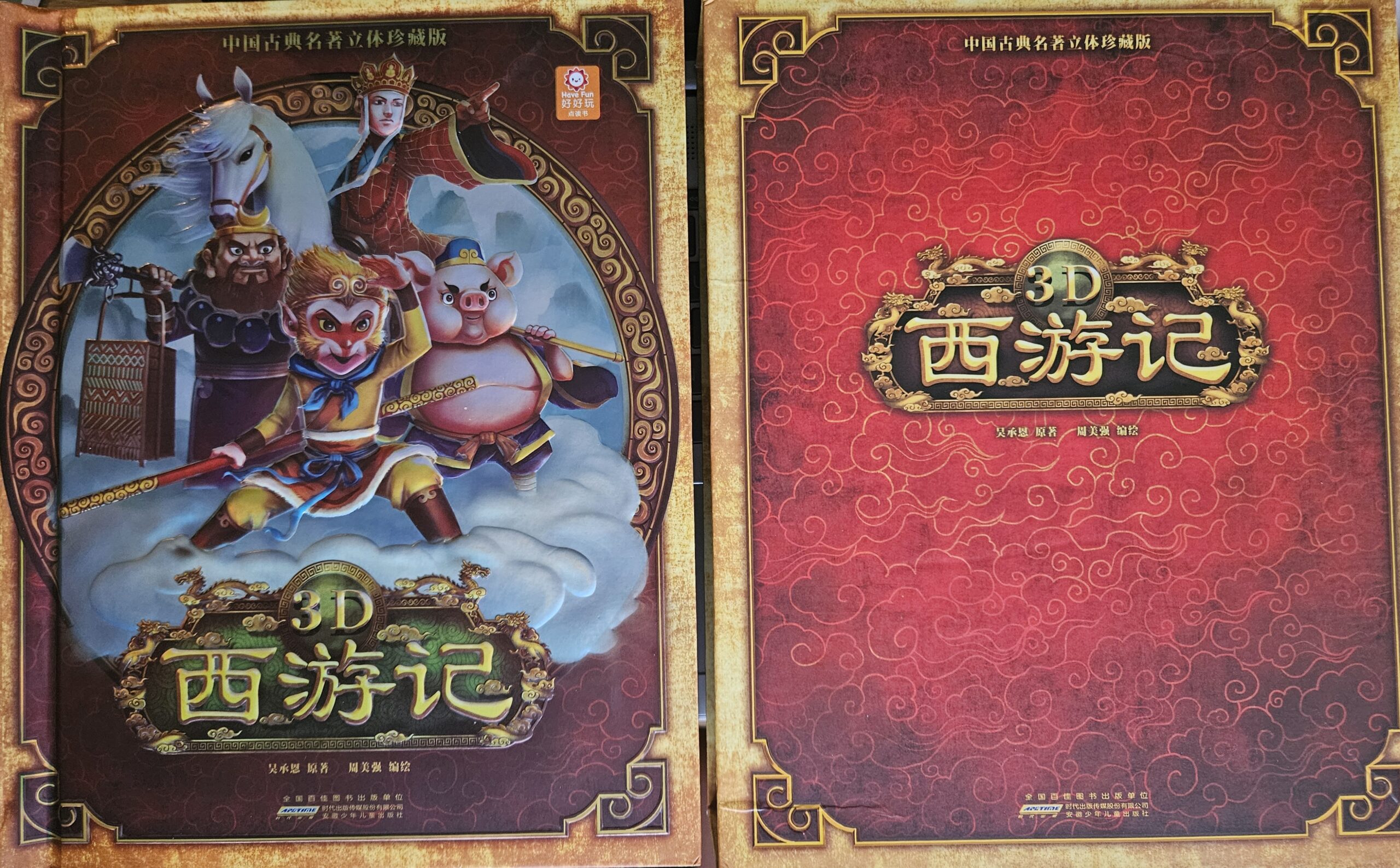
When you open this book, you are not just looking at childhood nostalgia; you are experiencing a grand, theatrical spectacle on paper. The core idea was to take China’s massive, centuries-old cultural myth of the Monkey King and compress its chaotic celestial battles, magical transformations, and legendary underwater kingdoms into a physical, three-dimensional experience.
The overall vibe is incredibly cinematic and authentic, heavily borrowing from traditional ink wash textures and vibrant folk colors. Instead of flat pages, you are suddenly hit with sweeping structures like a heavenly palace that literally floats in mid-air right before your eyes. It captures the pure kinetic energy of martial arts by utilizing multi-tiered layers and moving pull-tabs to mimic shape-shifting. Certain pages even utilize fluorescent ink (like the one applied to the map of Thror in The Hobbit: an unexpected Journey, Chronicles, where the ink reveals the invisible moon letters in the dark) to make mythical spiderwebs glow in the dark, blending ancient folklore with a sharp, modern aesthetic flair.
Before this milestone release, China’s historic expertise in traditional paper cutting rarely cross-pollinated with the commercial pop-up market, leaving the genre heavily dominated by Western designs. The 2016 release of Journey to the West completely shattered that dynamic and single-handedly ignited a massive “pop-up boom” across Asia. It proved to publishing houses worldwide that luxury, highly complex interactive books based on regional cultural treasures were immensely profitable.
From an engineering perspective, it pushed structural design to its absolute physical limits. While traditional Western pop-ups often rely on self-contained, isolated structures per page turn, this book mastered expansive 360-degree folds and overlapping compartments that changed how a story flows through three-dimensional space. It permanently altered the global perception that pop-up books are only for toddlers, transforming the format into a respected, high-art medium for adult collectors and literature lovers alike.
Furthermore, this tactile revolution paved the way for the hybrid experiences we see emerging today. The massive success of this interactive print model laid the groundwork for younger, modern adaptations—like the global Pop! Lit for Kids series by World Scientific Publishing—which now weave high-tech digital elements into the pages. Children can now scan the intricate physical folds with a tablet to watch animations pop up right alongside the paper mechanics. It is a beautiful full-circle moment for interactive reading, showing that old paper theater can perfectly harmonize with the digital age. However, that part of pop up history or better, pop up future is for others to describe.
Wang Wei
Wang Wei is a pioneering Chinese paper engineer and contemporary pop-up book creator based out of his independent design studio in Beijing. He initially built his creative foundation by studying traditional architectural forms and narrative art, establishing his studio, Jumping Paper, to blend historical culture with structural design. His career reached a major turning point through a highly successful crowdfunding campaign on the platform Modian, which funded his monumental project, Opening the Forbidden City. That breakthrough publication, which expands into a three-meter-long three-dimensional representation of China’s imperial central axis, went on to win global acclaim and earned him the prestigious Meggendorfer Prize from the Movable Book Society. Over the years, Wang has continuously evolved his craftsmanship by introducing deep, cascading pop-up mechanics and expansive telescoping layers. This progression has allowed him to transition from educational cultural guides to adapting complex literary masterpieces, cementing his position as a crucial figure in bringing modern Chinese paper engineering onto the international stage.
The opening the Forbidden City
The masterpiece of paper engineering titled Opening the Forbidden City (《打开故宫》) is a record-breaking pop-up book designed by the renowned Chinese paper sculptor and pioneer Wang Wei. Published in May 2020 by the Publishing House of Electronics Industry to commemorate the 600th anniversary of the iconic palace complex, this book made history when Wang Wei won the prestigious Meggendorfer Award in 2021, marking the first time a Chinese paper engineer received this global honor.
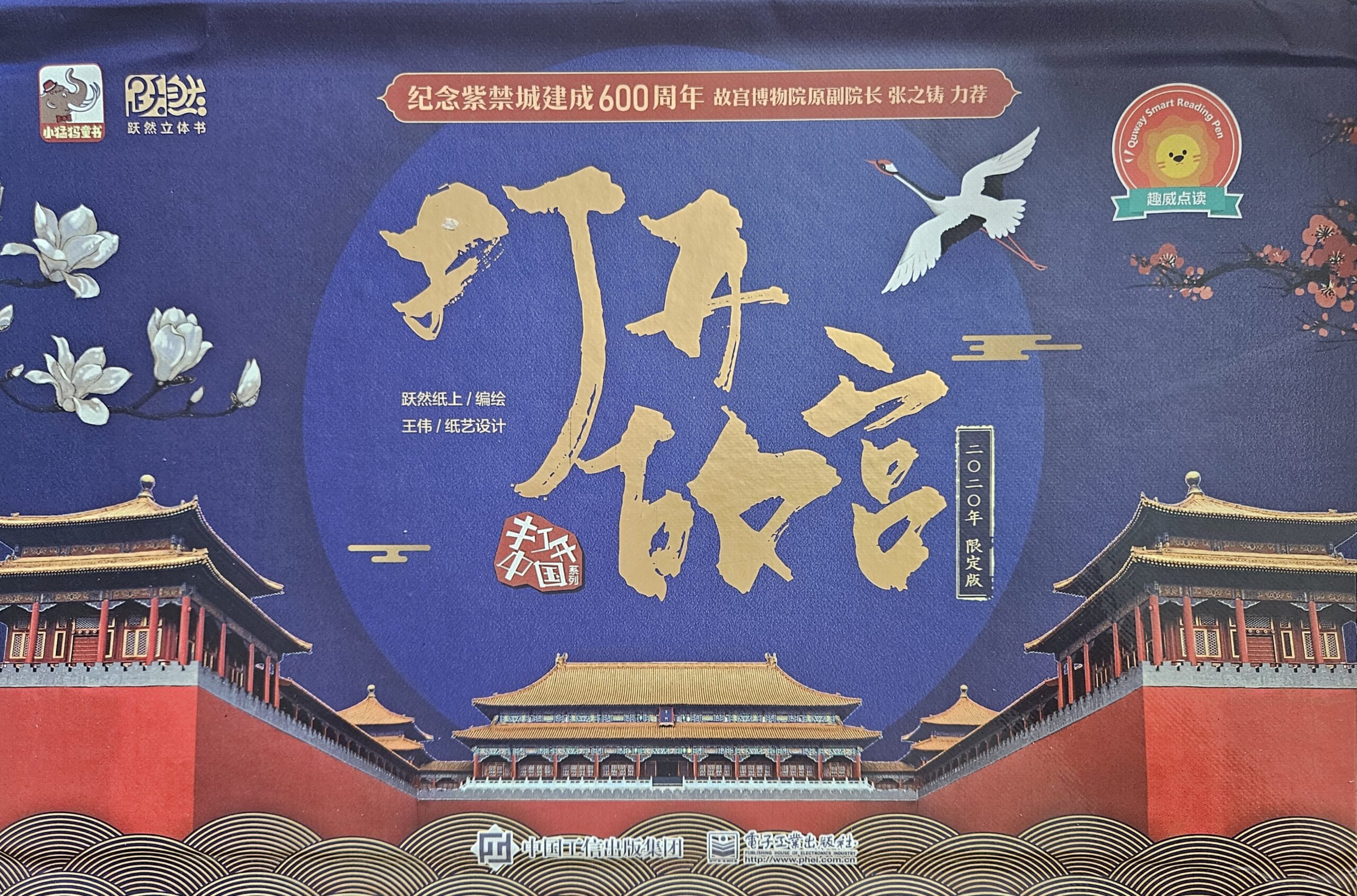
The book radiates a vibe of imperial grandeur, meticulous historical reverence, and awe-inspiring scale. Turning its heavy pages feels like stepping into a physical time machine, where vibrant, traditional color palettes perfectly mirror the actual lacquered red walls and golden glazed roof tiles of the real monument. It artfully balances a tone of historical solemnity with a sense of playful discovery.
Interactivity in this book serves a profound meaning by democratizing history and demystifying ancient architecture. The three-dimensional structures allow readers to physically navigate spatial layouts that were strictly forbidden to ordinary citizens for five centuries. By pulling tabs, peering through miniature windows, and lifting hidden flaps, passive reading transforms into active exploration. This tactile education brings ten core historic buildings, ninety-three structural explanations, and twenty-six traditional imperial stories to life.
The ultimate defining mechanical triumph of the book is its accordion-style foldout design. While it can be read sequentially page by page, the unique binding allows it to completely unfold into a continuous, 3.2-meter-long three-dimensional replica of the entire central axis of the Forbidden City. This massive, unbroken panorama displays every major imperial structural courtyard seamlessly at once.
Wang Wei’s grand foldout design draws clear inspiration from western pop-up masters like Matthew Reinhart, who pioneered the concept of a book unfolding into a cohesive physical landscape in works like Game of Thrones: A Pop-Up Guide to Westeros. However, their artistic executions differ beautifully to match their subjects. While Reinhart designs his maps as multidirectional grids that unfold into 360-degree topographical blocks for a free-roaming experience, Wang Wei utilizes a linear accordion layout that stretches straight along a single axis to mirror the strict symmetrical design of the palace. Reinhart‘s work emphasizes gravity-defying kinetic theater with twisting towers, whereas Wang Wei focuses on precise real-world architectural realism, replicating micro-details like roof brackets and grand staircases. Ultimately, Wang Wei adapted Reinhart‘s breakthrough map concept into a long-scroll format that honors traditional Chinese landscape paintings, proving that contemporary paper engineering can elegantly preserve ancient cultural heritage.
Opening China: Amazing Architecture (… edition)
Opening China: Amazing Architecture (published in Chinese as part of the award-winning Opening / 打开 structural book series) is a monumental achievement in three-dimensional publishing. Conceived by the creative design studio Yueran Zhishang (跃然纸上) and led by master paper engineer and Central Academy of Fine Arts professor Wang Wei, this flagship work was published by the Publishing House of Electronics Industry (电子工业出版社) in 2021. Acting as a tactile, archive-grade exploration of China’s structural history, the book celebrates a vast chronological timeline that transitions from ancient dynasty landmarks to futuristic modern megastructures.
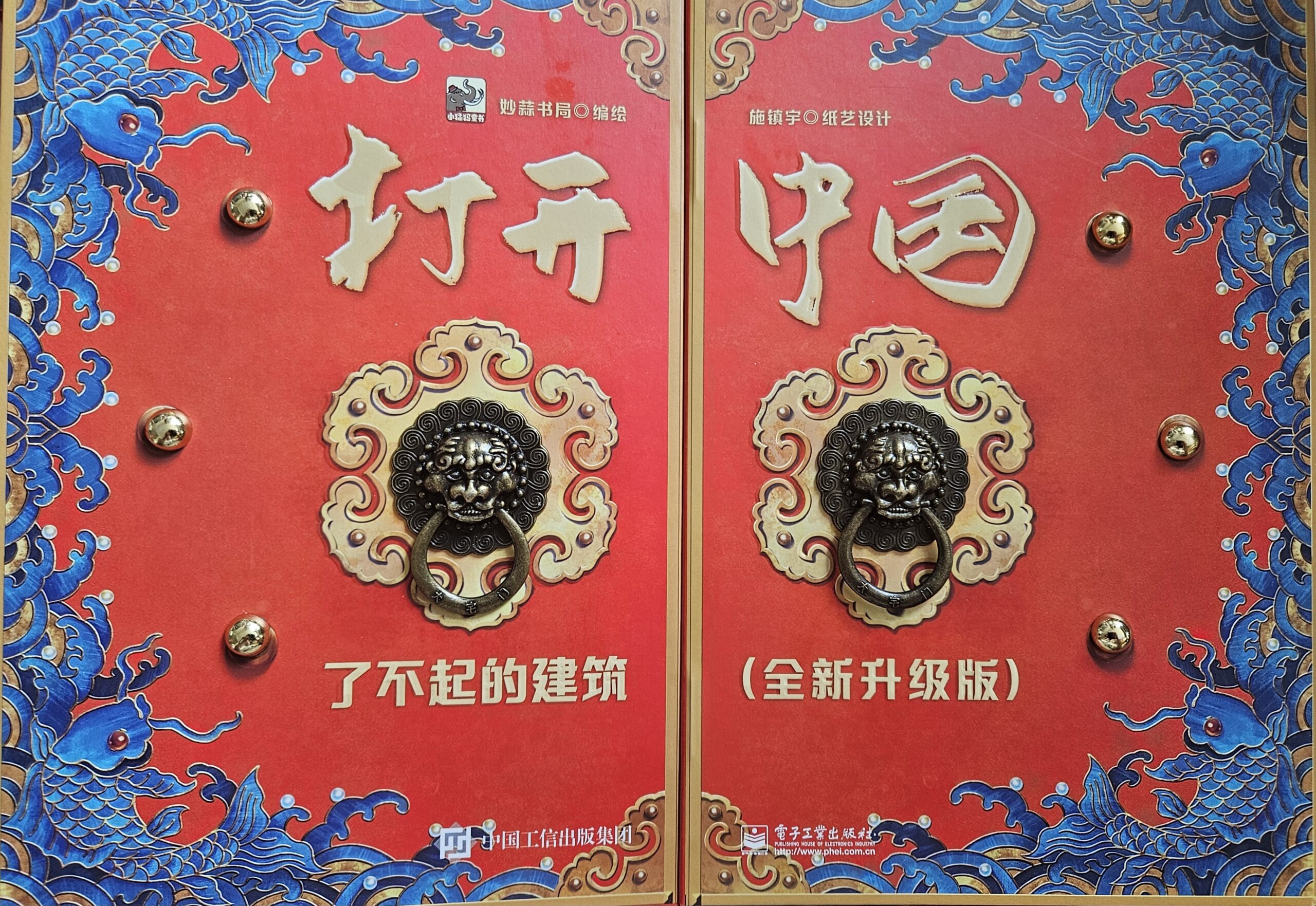
The overall vibe of the book is one of historical reverence mixed with engineering awe, capturing the traditional Chinese philosophical concept of structural balance and the dialogue between human construction and nature. The visual tone features meticulous digital artwork that honors the exact texturing of ancient timber, glazed roof tiles, and sleek modern steel panels. Visually, it establishes a breathtaking sense of contrast. As readers progress through the pages, the atmospheric color palette smoothly transitions from the solemn crimson-and-gold imperial majesty of ancient palaces to the blinding, neon-lit, silver-and-glass scale of China’s contemporary urban skylines.
The defining feature of Wang Wei’s engineering is its sheer sense of scale and the masterful manipulation of 360-degree viewing space. Unlike standard Western pop-up books designed to be viewed strictly from a single forward angle, this volume is built on an unfolding accordion-fold system that stretches out to an incredible panoramic layout over three meters long when fully opened. This allows the reader to visually map out entire historic city axes and building complexes all at once.
The pop-up mechanics rely heavily on multi-tiered parallel folds and complex V-folds, meaning that structures do not just lift upward but telescope directly into the air. Multistory ancient pagodas and modern skyscrapers rise to dramatic, stable heights, perfectly mimicking real-world verticality. The book invites deep physical exploration through a vast array of hidden interactive flip-flaps, pull-tabs, and sliding drawer panels. Readers can open side compartments to peek inside the buildings, pull structural tabs to reveal cross-sections of ancient interlocking wooden joints (dougong) used in imperial engineering, or slide panels to see how massive historic walls stand without a single nail. By treating heavy-weight paper not merely as a flat canvas but as an architectural medium itself, the book transforms reading into an immersive, hands-on journey through spatial history.
The Old Summer Palace
Following the success of Opening the Forbidden City, the acclaimed paper engineer Wang Wei turned his attention to China’s lost imperial masterpiece to create “Opening the Old Summer Palace” (Chinese: 《打开圆明园》). This equally ambitious three-dimensional book serves as a historical resurrection, utilizing advanced paper craft to rebuild a legendary landmark that today exists only as a protected park of stone ruins in Beijing. It is not the Summer Palace everyone visiting Beijing is visiting, like I did 😂🤣:
Designed by Wang Wei as a spiritual sequel to his award-winning Forbidden City project, the book was published by the Publishing House of Electronics Industry around late 2021. It was launched following intense structural research and historical consultation to ensure the pop-up models precisely replicated the architecture before its destruction in 1860. The work targets history enthusiasts, families, and collectors, continuing the publisher’s lineage of producing premium, high-density cultural paper art.
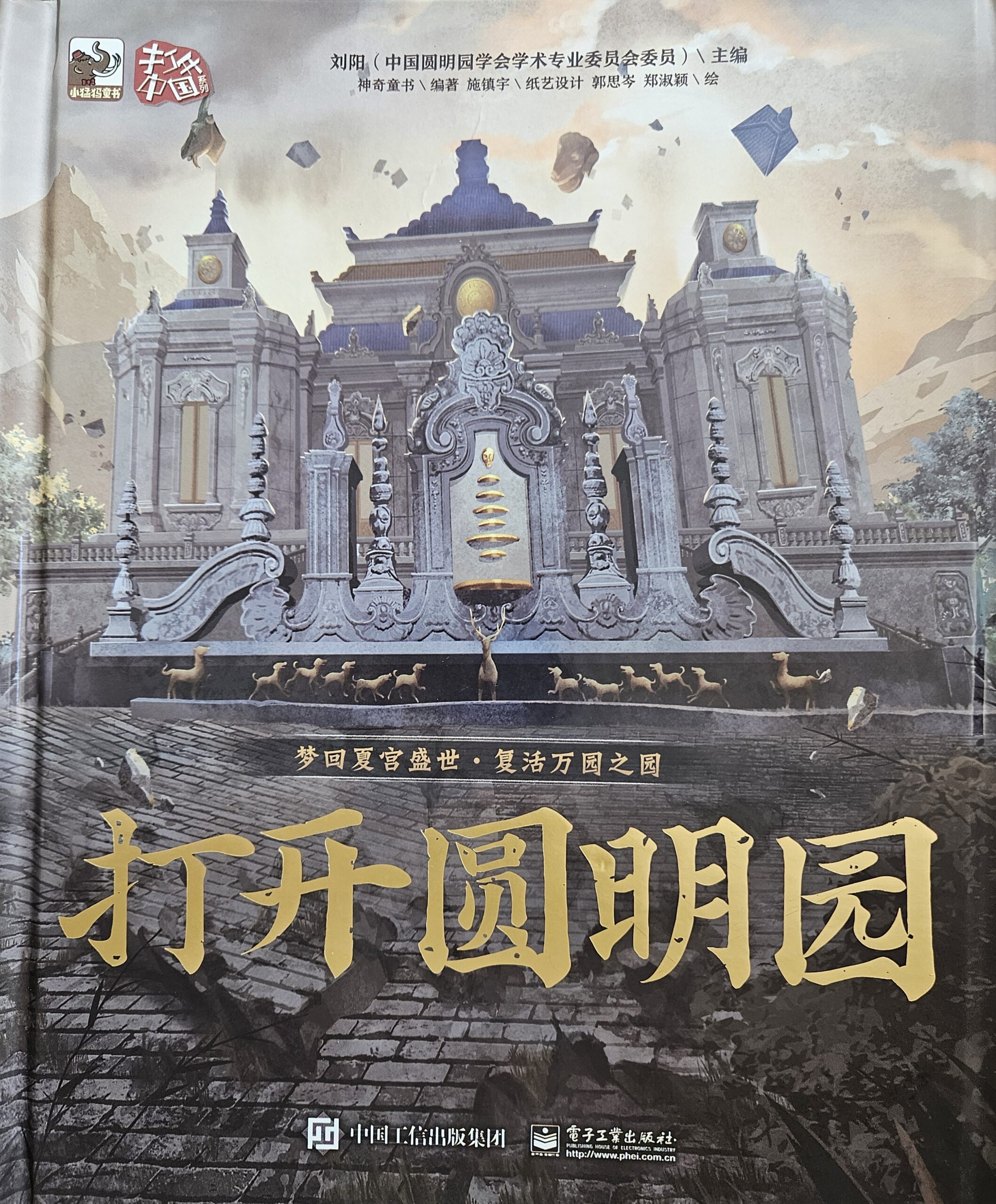
The emotional vibe of this book balances breathtaking poetic beauty with a poignant sense of historical resilience. Because the real Old Summer Palace—known historically as the “Garden of Gardens”—was burned down during the Second Opium War, turning these pages carries a distinct feeling of magical restoration. The color palettes lean into the lush greens and shimmering blues of imperial water landscapes, interspersed with the brilliant marble whites of its European-style sectors. It feels less like visiting a rigid palace and more like exploring a romantic, dreamlike sanctuary frozen in its golden age.
Hybrid between Analog and Digital
While the interactivity (which here applies to a hybrid form of analog and digital interactivity) of the Forbidden City book demystifies exclusive, heavily guarded structures, the interactive pop-ups here achieve a different purpose: they serve as the only physical medium where the general public can witness these destroyed spaces in 3D. Since visitors to the real site in Beijing are met with flat grass and broken stone pillars, the pop-up mechanics act as an archaeological time machine. Pulling tabs and lifting flaps does not just reveal information; it literally raises lost history from the ashes. The engineering painstakingly recreates nine of the palace’s most celebrated landscapes, including the intricate waterscapes and the iconic Western Mansions, making the interactive experience deeply educational and emotionally impactful.
True to Wang Wei’s signature style, the book features a grand accordion-style binding that allows the entire book to unfold into a singular, sprawling panoramic landscape. Rather than being bound to the rigid, linear symmetry of the Forbidden City’s central axis, this foldout stretches dynamically to mirror the organic, asymmetrical nature of a massive water garden.
When compared to Matthew Reinhart’s foldout map structures, the strategic adaptation becomes clear. Reinhart’s Western pop-up maps, like his guide to Westeros, deploy a uniform multi-directional grid that pops up simultaneously to look like a geometric tabletop board game. Wang Wei instead molds Reinhart’s concept into a fluid landscape that behaves like a traditional Chinese long-scroll painting. As the book stretches out, the pop-ups form an organic sequence of artificial hills, winding lakes, traditional Chinese pavilions, and Baroque stone fountains. By marrying Reinhart’s Western engineering mechanics with Eastern architectural philosophy, the foldout successfully captures the vast, interconnected water-and-land harmony that made the Old Summer Palace a pinnacle of global garden design.
The Lord of the Rings
A more on western popular franchise based example of chinese pop up artistry is The Lord of the Rings.
This book comes in a slipcase …
The Lord of the Rings Pop-Up Book (Chinese: 魔戒 立体书) is a lavish Chinese adaptation of J.R.R. Tolkien’s epic fantasy, engineered by pioneering paper artist Wang Wei and published around 2024-2025 amid a surge of new Chinese editions following the works’ entry into public domain there.
Available via platforms like Temu and AliExpress in a “genuine” hardcover format, it features intricate pop-up scenes exploring Middle-earth’s realms, including a standout Moria spread with dramatic layered architecture, Balrog encounters, and unfolding pathways that evoke the Fellowship’s perilous journey through the mines.
This book transforms Tolkien‘s narrative into a visual, interactive odyssey with multi-page spreads depicting iconic locales like Moria, Hobbiton, and Mordor, blending detailed Chinese illustrations with pull-tabs and 3D elements to immerse readers in the films’ and book’s mythic scope, often sold as a collector’s item with high-quality printing for global fans. It capitalizes on post-2023 copyright lapse, offering bilingual accessibility and film-inspired fidelity for a new audience.
EXAMPLE from:

Wang Wei‘s engineering shines in expansive, telescoping structures—like Moria’s vast halls with movable bridges and fiery reveals—alongside mini-pops for characters and creatures, achieving a balance of grand scale and precise mechanics suited to mass-market Chinese production techniques refined from his award-winning works like Opening the Forbidden City. These designs emphasize depth and narrative flow through sequential activations.
Emerging from China’s pop-up renaissance (sparked by Journey to the West adaptations), this title demonstrates Western epics’ viability in the format, boosting Wang Wei’s profile as a Meggendorfer Prize recipient and fueling demand for ambitious, affordable imports that rival Western publishers like Reinhart’s Harry Potter series. Its success highlights pop-up globalization, inspiring hybrid cultural adaptations amid booming e-commerce distribution.
Colette Fu
Colette Fu (傅三三), of Chinese descent, creates large-scale pop-ups from her photography, documenting ethnic minorities; her We Are Tiger Dragon People series (started 2008, via Fulbright) captures Yunnan’s 25 minority groups in exuberant, multi-layered spreads exhibited at the National Museum of Women in the Arts.
Fu designed China’s largest pop-up book during a Shanghai residency and series like My First Pop-Up Books (post-grad, 16×24″ volumes with tabs and foldouts) and Tao Hua Yuan Ji (on Jin Dynasty poetry utopia).
She teaches workshops internationally, focusing on themes of diaspora, nature, and folklore in projects like Noodle Mountain.
I do not own any books of her so no examples available.
Heaven official’s blessing: collector’s edition pop up
Heaven Official’s Blessing: Collector’s Edition Pop-Up Book (also known as Tian Guan Ci Fu or TGCF) is a luxury, large-format premium display piece published by Yunnan Science and Technology Press. It features the breathtaking manhua art style of illustrator STARember. Rather than a standard reading novel, it is engineered as an archive-grade 3D art masterpiece consisting of over 600 individual parts and roughly 1,000 intricate manufacturing steps.
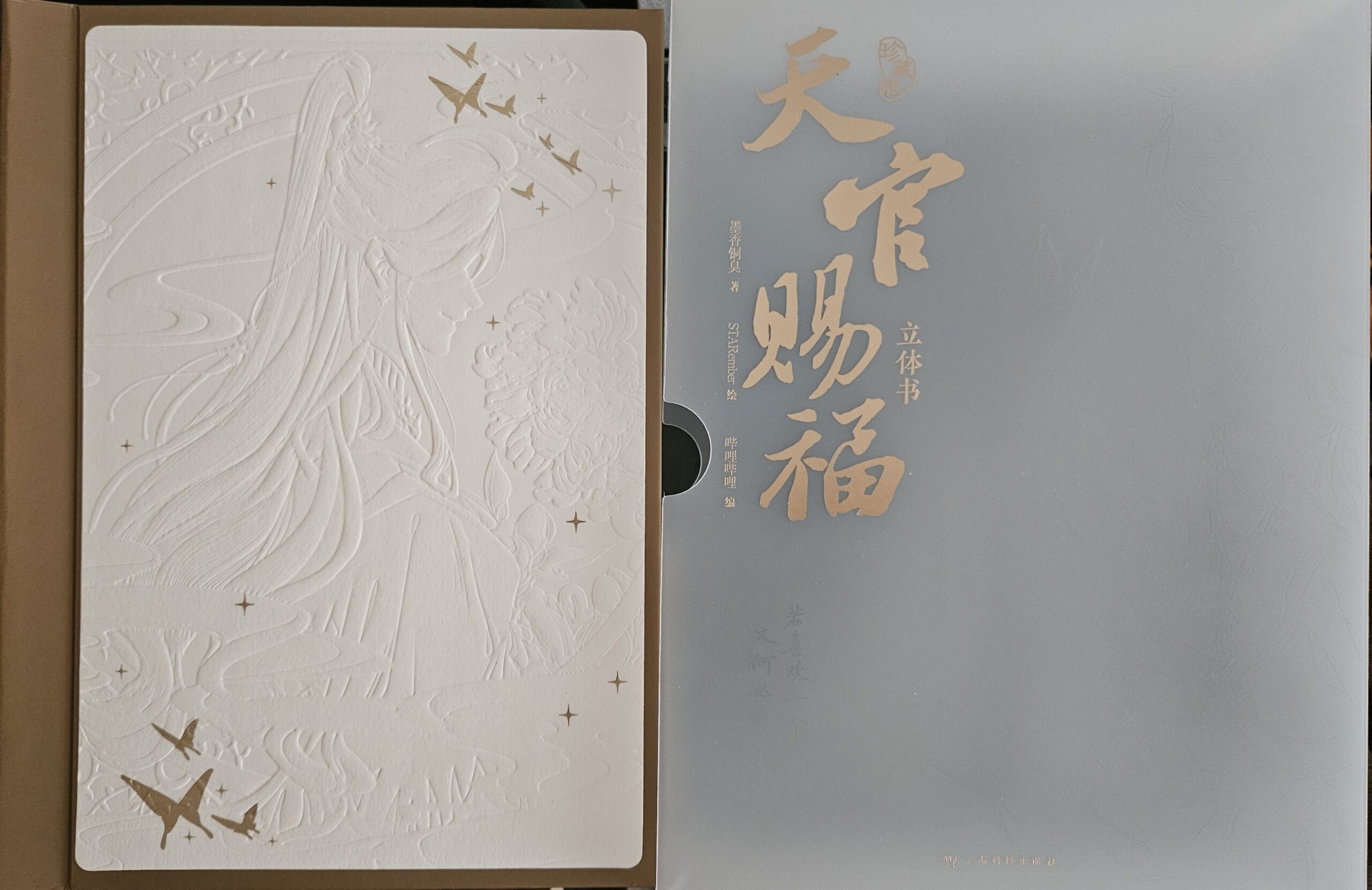
The book adapts the beloved Chinese danmei fantasy novel by Mo Xiang Tong Xiu (MXTX). The story follows Xie Lian, a disgraced crown prince who ascends to godhood for the third time, only to discover he has no followers. On his journey to earn his place in heaven, he encounters Hua Cheng, a devastatingly powerful and feared Supreme Ghost King who has silently loved and protected Xie Lian for 800 years. The overall vibe is deeply romantic, ethereal, and melancholic, yet grand in scale. It beautifully blends traditional Chinese mythology, god-and-ghost politics, and unconditional devotion. The book translates this tone into three dimensions by contrasting the bright, floating pavilions of the Heavenly Realm with the dark, vibrant, neon-red aesthetics of the Ghost City.
The book utilizes multi-tiered paper engineering across seven distinct pop-up spreads to create physical depth. Instead of just static pop-ups, it uses mechanical layers to enhance the story’s legendary scale. Flipping a page causes entire structures, such as the massive, tiered pagodas of the Ghost City, to rise dramatically into the air to mimic the otherworldly architecture of the source material. Delicate paper layers are stacked over one another to simulate thousands of fluttering silver butterflies and the sea of floating lanterns from the famous Mid-Autumn Festival scene. For narrative interaction, decorative tabs, flaps, and pull-sliders allow fans to shift scenes slightly or reveal touching dialogue snippets between the two protagonists hidden within the art.
To justify its luxury collector status, the engineering incorporates high-end, multi-sensory components that go beyond basic paper. In addition to paper, cardboard, and electrical components, the engineering of the book relies heavily on clear acetate and transparent plastics to create the illusion of floating architecture in the Heavenly Realm.
Because the Heavenly Capital is supposed to consist of palaces floating suspended high in the clouds, standard paper tabs would ruin the illusion. The designers solved this by using rigid, see-through plastic sheets as the supporting pillars and background connectors. When the page opens, these transparent plastics lift the palaces into the air, making them appear completely detached from the ground and weightless.
The crowning feature of the book is a built-in LED lighting system. When specific pages are opened, internal lights glow through translucent paper panels to realistically illuminate the Mid-Autumn lanterns and spellbinding night scenes. This mechanism works via hidden magnetic trigger elements embedded inside the cardstock layers; a miniature, included silver butterfly wand is passed over the page to magically activate the lights. The earlier mentioned plastics are used in combination with translucent vellum paper and plastic filmstrips across the book’s spreads to catch the integrated LED light, creating a layered, glowing depth that mirrors STARember’s ethereal digital art style. This way the Heavenly city floats but so do the Mid-Autumn lanters.
Furthermore, the heavy-weight hardcover casing and internal accents utilize intensive metallic gold and crimson foil stamping alongside deep embossing to add a luxurious, metallic tactile texture. The collector’s box also includes a bundle of mixed-media merchandise, such as changing lenticular art cards and heavy acrylic displays that supplement the paper book.
All of these are new developments in used materials for pop up books.
Other Asian Developments
Xu Bing’s Book from the Ground Pop-up Book (2021) uses pictographic symbols in interactive pop-outs to explore universal communication, expanding his conceptual art into tactile, low-tech experiences.
China’s pop-up scene has grown with skilled engineers matching Western masters like Sabuda, producing complex books for the Asian market amid evolving paper tech.
While Iranian picture book illustrators (e.g., Morteza Zahedi) excel internationally, true pop-up specialists like Rahmanian bridge tradition and innovation despite sanctions limiting access.
Personally I’m very excited to see where all developments in paper engineering will lead to and which awesome books we can still expect, now that China and hopefully also Iran (being hit by the war right now) have joined the world of paper engineering …
There will be another final blogpost soon so keep being vigilant!